Exercise and Varicose Veins: The Relationship Explained
One of the most common questions Dr. Hadaya hears at our Hamilton, NJ vein clinic is: "Should I be exercising with varicose veins?" The short answer is yes — but with important nuance. Exercise cannot reverse the structural damage to vein valves that causes varicose veins, but it can meaningfully reduce symptoms, slow disease progression, and improve your overall venous circulation. Here is what the evidence shows.
How Exercise Helps Venous Circulation
The calf muscles are often called the "second heart" of the circulatory system. Every time you contract your calf muscles — whether walking, cycling, or climbing stairs — they squeeze the deep veins of the lower leg, pushing blood upward toward the heart. This calf muscle pump is responsible for a significant portion of venous return, and it is the primary mechanism by which exercise benefits vein health.
When you strengthen and regularly activate the calf muscles, you:
- Reduce the volume of blood pooling in the lower leg veins
- Lower venous pressure throughout the superficial system
- Reduce ankle swelling and leg heaviness
- Improve oxygen delivery to tissues that may be poorly perfused due to venous stasis
- Support healthy weight management, which reduces abdominal pressure on leg veins
The Best Exercises for Varicose Veins
Walking
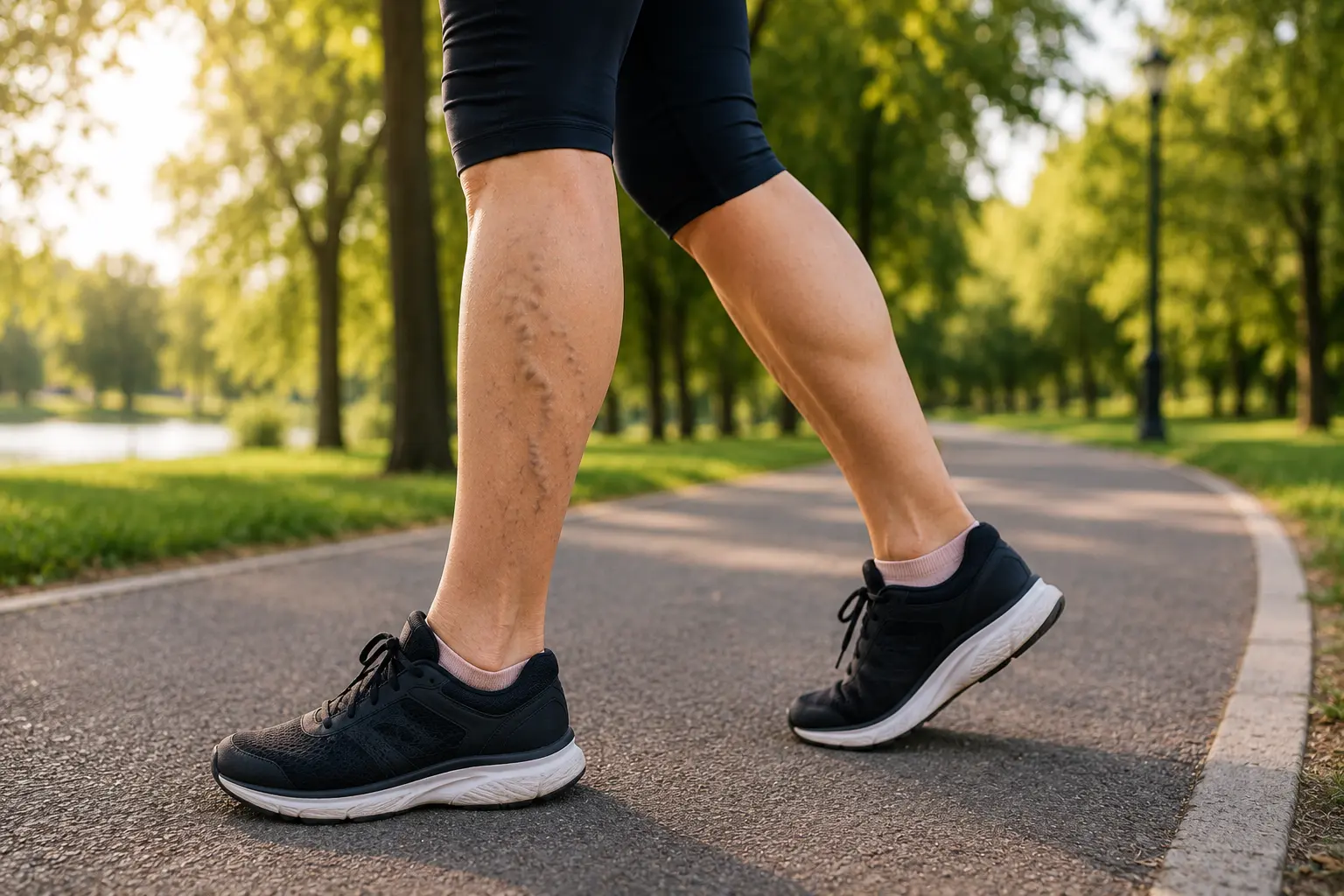
Walking is the single best exercise for people with varicose veins. It is low-impact, activates the calf pump continuously, and can be done anywhere. Aim for 30 minutes of brisk walking most days. If you live in the Hamilton, Trenton, or Princeton area, even a flat neighborhood walk is highly effective.
Cycling (Road or Stationary)
Cycling — particularly on a flat surface or a stationary bike — provides excellent calf activation without the impact stress of running. It is particularly well-tolerated by patients who have leg discomfort when standing. Spinning classes are also beneficial as long as the room temperature is not excessively hot (heat dilates veins and can temporarily worsen symptoms).
Swimming and Water Aerobics
Swimming is arguably the ideal exercise for venous disease. Water pressure provides external compression to the legs (similar to compression stockings), while the horizontal position reduces the gravitational challenge to venous return. The resistance of water also builds leg muscle strength without impact. Water aerobics classes are popular at community pools throughout Mercer County and are highly recommended for patients who cannot tolerate other exercise forms.
Calf Raises
Simple standing calf raises — rising up on your toes 20–30 times, multiple times per day — are an underrated tool for activating the calf pump. They can be done at your desk, in the kitchen, or in line at the grocery store. Patients who incorporate calf raises into their daily routine consistently report reduced evening leg heaviness.
Yoga (Certain Poses)
Yoga poses that elevate the legs above the heart — such as legs-up-the-wall (Viparita Karani) — are particularly helpful for draining pooled blood from the lower legs. A 15-minute session of leg-elevation yoga at the end of the day can provide noticeable relief from heaviness and swelling.
Exercises to Approach with Caution
Heavy Weightlifting
Heavy resistance exercises — squats, deadlifts, leg press with maximal weight — generate a significant transient increase in intra-abdominal pressure (the Valsalva maneuver). This can temporarily spike venous pressure in the legs. If you enjoy strength training, lighter weight with higher repetitions is preferable to maximal-effort lifts. Wear compression stockings during training sessions.
High-Impact Running on Hard Surfaces
Running is not contraindicated for varicose veins, but the repetitive impact can increase leg swelling and discomfort if the venous disease is already significant. Treadmill running or running on softer surfaces (grass, track) is better tolerated than concrete. Again, compression stockings make a significant difference during runs.
The Role of Compression Stockings During Exercise
Medical-grade compression stockings (20–30 mmHg) worn during exercise reduce venous pooling by providing external support to the vein walls and reducing the diameter of superficial veins. For patients with symptomatic varicose veins, wearing compression during workouts can prevent the post-exercise swelling and heaviness that discourages activity. Ask our team for a fitting recommendation at your next visit.
Exercise Alone Is Not Enough
It bears emphasizing: exercise is a valuable adjunct therapy, not a cure. If your vein valves are failing and blood is refluxing in your saphenous vein, no amount of walking will close those valves. The only way to address the root cause is a minimally invasive procedure such as RFA, EVLT, or VenaSeal — all of which are performed in our Hamilton, NJ office.
If your leg symptoms are limiting your ability to exercise — or if you are exercising regularly but still have significant varicose veins — a duplex ultrasound evaluation is the right next step. Call Vein Treatment Centers of NJ at 609-585-4666.
Related Articles