
Venous Insufficiency Treatment Hamilton NJ
Expert treatment for chronic venous insufficiency in Hamilton, New Jersey
Medically reviewed by Dr. Z. Hadaya, MD · Board-Certified Vein Specialist· Last reviewed September 2026
What is Venous Insufficiency? - Hamilton NJ Vein Specialist
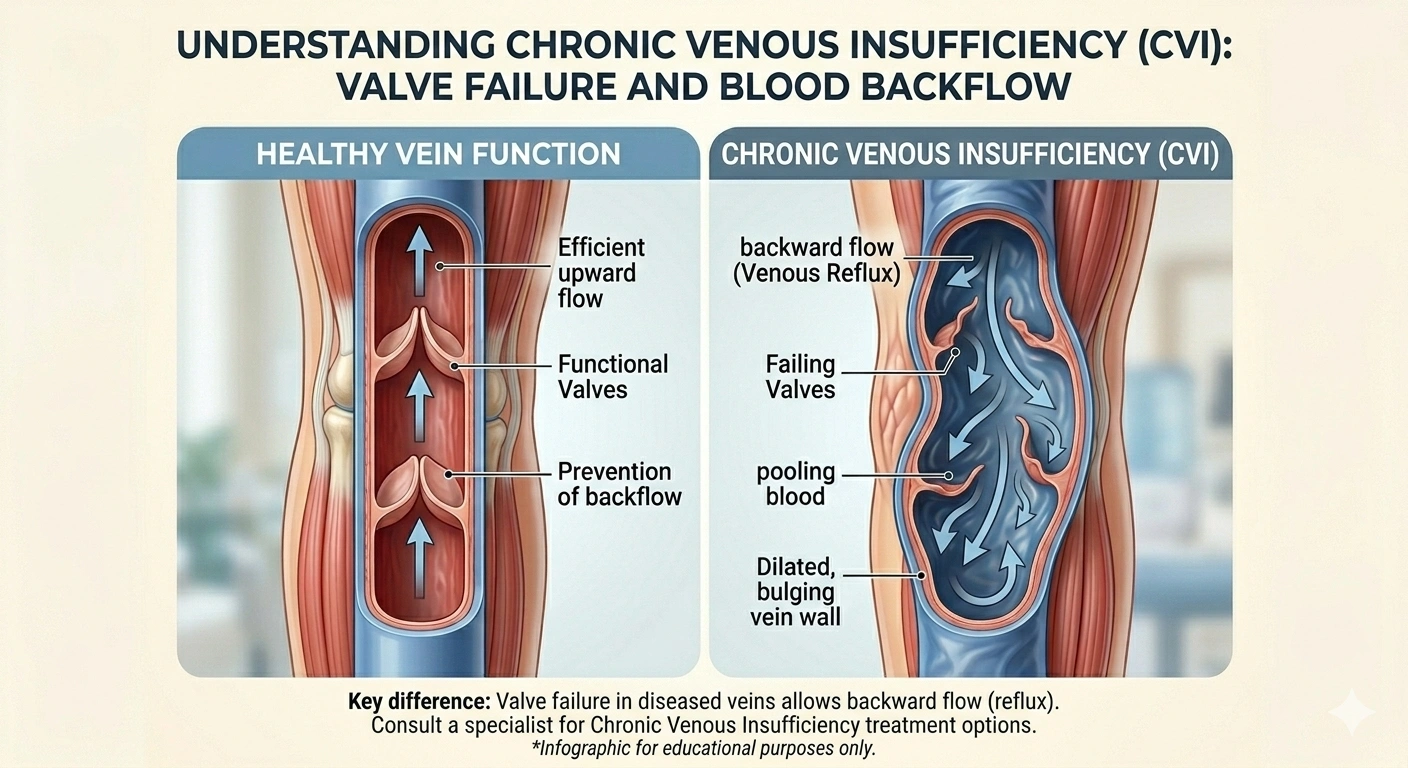
Chronic venous insufficiency (CVI) is a condition where the veins in your legs have difficulty sending blood back to your heart. This happens when the valves inside your veins become damaged or weakened, allowing blood to flow backward and pool in the lower legs. Over time, this can lead to various symptoms and complications. Our Hamilton, New Jersey vein center specializes in treating venous insufficiency.
Venous insufficiency is a progressive condition that affects millions of Americans. While it may start with mild symptoms like leg heaviness or swelling, if left untreated, it can progress to more serious complications including skin changes, stasis dermatitis, and venous ulcers.
How Healthy Veins Work
Normal Vein Function
In healthy veins, one-way valves ensure blood flows only toward the heart. When you walk or move your legs, the calf muscles act as a pump, squeezing the deep veins and pushing blood upward against gravity.
When Valves Fail
When these valves become damaged or weakened, they don't close properly. Blood leaks backward and pools in the lower legs, causing increased pressure in the veins and leading to various symptoms.
Symptoms
- •Leg swelling, especially in ankles and lower legs
- •Aching, throbbing, or heaviness in legs
- •Pain that worsens with standing
- •Leg cramps or muscle fatigue
- •Visible varicose veins
- •Skin color changes (reddish-brown discoloration)
- •Itching or burning sensation
- •Thickened or hardened skin (lipodermatosclerosis)
Risk Factors
- •Age (risk increases after 50)
- •Family history of venous disease
- •Female gender (hormonal factors)
- •Pregnancy and multiple pregnancies
- •Obesity or being overweight
- •Prolonged standing or sitting
- •History of blood clots (DVT)
- •Lack of physical activity
Treatment Options
Conservative Care
- •Compression stockings
- •Regular exercise
- •Leg elevation
- •Weight management
Minimally Invasive
- •Endovenous laser therapy (EVLT)
- •Radiofrequency ablation
- •VenaSeal closure
- •Sclerotherapy
Advanced Care
- •Phlebectomy
- •Wound care for ulcers
- •Combination therapies
- •Follow-up monitoring
Why Early Treatment Matters
Venous insufficiency is a progressive condition. Without treatment, symptoms typically worsen over time and can lead to serious complications:
- •Stasis dermatitis and skin changes
- •Venous ulcers that are difficult to heal
- •Increased risk of infection
- •Reduced quality of life and mobility
Modern treatments for venous insufficiency are highly effective and minimally invasive. Benefits include:
- •Quick, office-based procedures
- •Minimal downtime and fast recovery
- •Often covered by insurance
- •Significant symptom relief
Get Expert Diagnosis and Treatment
Dr. Hadaya specializes in the comprehensive diagnosis and treatment of venous insufficiency. Using advanced ultrasound technology and proven treatment methods, we can help you find relief from your symptoms and prevent future complications.
How Chronic Venous Insufficiency Is Diagnosed
The diagnosis of chronic venous insufficiency (CVI) is made with a duplex ultrasound, not by appearance alone. The scan watches blood flow in the leg veins as you stand and as the technician applies gentle pressure, measuring how long blood flows backward (reflux) when it should be moving up toward the heart.
Reflux lasting longer than half a second in a superficial vein confirms the diagnosis and shows exactly which veins are involved and how severe the leak is. This map is what the treatment plan is built from — it is the difference between guessing and targeting.
Learn about the vein ultrasound evaluationTreatment Options for Venous Insufficiency
CVI is treated in a stepwise way. Conservative care comes first; a minimally invasive procedure is added when symptoms persist or skin changes appear.
Compression and conservative care
Graduated compression stockings, leg elevation, regular walking, and calf-strengthening support venous return and often reduce symptoms. Most insurers require a documented trial before authorizing a procedure.
Radiofrequency ablation (RFA)
A catheter delivers controlled heat that seals a refluxing saphenous vein closed. Performed in the office under local anesthesia in about 45 minutes; most patients walk out and return to normal activity the same day.
VenaSeal closure
A medical adhesive closes the vein without heat, so no tumescent anesthesia and usually no compression stockings afterward. A good option for patients who are needle-sensitive or want the simplest recovery.
Sclerotherapy and phlebectomy
Sclerotherapy injections and micro-incision phlebectomy close or remove the smaller branch veins and surface varicosities once the main reflux is treated.
When Venous Insufficiency Needs Treatment
CVI is progressive — the pressure that causes it does not resolve on its own. Book an evaluation if you have:
- •Leg heaviness, aching, throbbing, or night cramps that build through the day
- •Ankle swelling that no longer clears overnight
- •Skin changes near the ankle — discoloration, dryness, or hardening
- •Varicose veins that are enlarging, or any healed or open ankle sore
What to Expect at Your First Visit
Your first appointment is a free screening. Dr. Hadaya reviews your symptoms and history, examines both legs, and performs or schedules a duplex ultrasound to map the reflux.
Based on the ultrasound, you receive a written plan that names the affected veins, the recommended procedure or procedures, expected recovery, and how your insurance applies. Our team verifies benefits before anything is scheduled.
Insurance and Cost
When ultrasound confirms reflux and you have symptoms — pain, swelling, skin changes — treatment of venous insufficiency is medically necessary and is typically covered by Medicare, Medicaid, and most major plans, generally after a documented compression trial of six to twelve weeks.
Treatment done purely for the appearance of veins is not covered. Our billing team confirms your specific coverage and any out-of-pocket cost in writing before your procedure, and offers flexible payment options for anything not covered.
Frequently Asked Questions
Can chronic venous insufficiency be cured?
The veins already damaged cannot be repaired, but the condition can be effectively controlled. Closing the refluxing veins removes the source of the pressure, and blood reroutes through healthy deep veins. Symptoms usually improve and progression stops. New veins can develop over time, which is why periodic follow-up is worthwhile.
What happens if I leave it untreated?
CVI tends to worsen in stages: symptoms first, then ankle swelling, then skin discoloration and stasis dermatitis, and eventually venous leg ulcers that are slow and difficult to heal. Each stage is harder to reverse than the one before, so earlier treatment is simpler.
Is the procedure painful, and how long is recovery?
The procedures are done under local anesthesia and most patients describe only pressure or mild stinging. You walk immediately afterward, and normal activity resumes the same or next day. Strenuous exercise is usually held for about a week.
Will my insurance make me try compression stockings first?
Most plans require a documented trial of compression, typically six to twelve weeks, before they will authorize a procedure. We start that clock at your first visit and handle the documentation.
Are the results permanent?
A vein that is properly closed does not reopen. Over the years, the same underlying tendency can cause new veins to become refluxing, so some patients need a touch-up procedure later. Follow-up ultrasounds catch this early.
How soon can I be seen?
We generally offer an evaluation within a week, including Saturday mornings, at our Hamilton, NJ office. Call 609-585-4666 (NJ) or 267-728-7440 (PA).
Ready to book?
If those answers cleared things up, the next step is a free vein screening with Dr. Hadaya.
Book a free screeningRelated Treatments
Varicose Veins
Minimally invasive RFA, VenaSeal and sclerotherapy for the refluxing veins behind chronic venous insufficiency.
Ultrasound Evaluation
The painless duplex scan that confirms CVI and maps exactly which vein valves are leaking.
Venous Ulcers
Advanced care for the non-healing ankle wounds that untreated venous insufficiency can cause.