
When Should You See a Vein Specialist? 7 Signs It's Time to Call
Medically reviewed by Dr. Z. Hadaya, MD
Vein Treatment Centers of NJ
Don't Wait Until It's a Crisis
One of the most consistent patterns we see at our Hamilton, NJ vein clinic is patients who have lived with significant vein symptoms for years — sometimes decades — before seeking an evaluation. The most common reason: they were not sure if what they were experiencing was serious enough to warrant a doctor visit. This guide will answer that question clearly.
Sign 1: Visible Varicose Veins That Are Growing or Multiplying
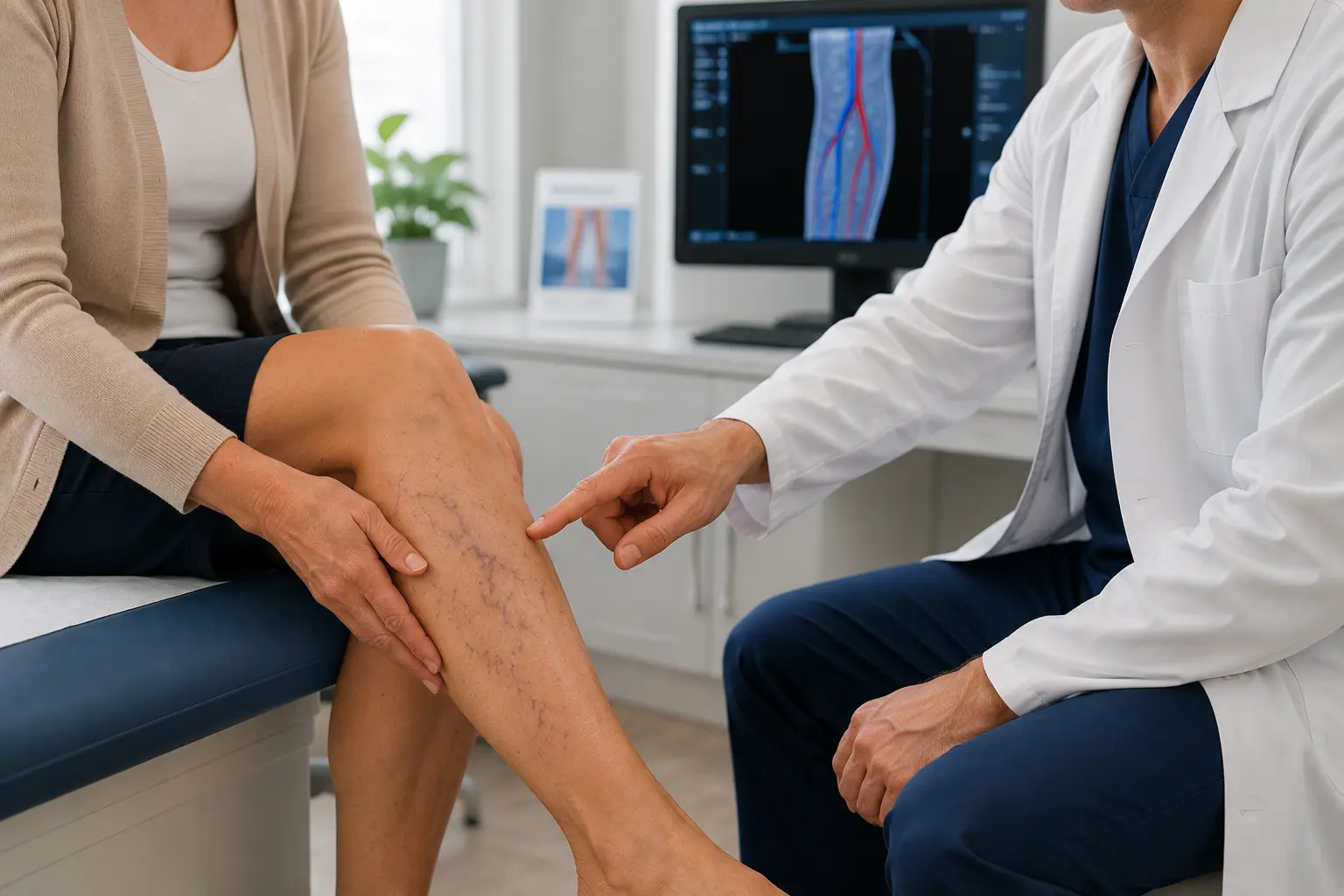
If you have varicose veins that are visibly enlarging over months, or if you are developing new ones in areas that were previously clear, the underlying disease is progressing. This is the time to act — not wait. Treating varicose veins early, before they cause skin damage, bleeding, or ulcers, results in simpler procedures and better outcomes.
Sign 2: Leg Pain, Heaviness, or Aching That Worsens Through the Day
Venous pain has a characteristic pattern: it starts mild in the morning, worsens as the day progresses, and peaks in the late afternoon and evening when blood has pooled in the lower legs all day. If you regularly notice your legs feel heavy, achy, or full by mid-afternoon, and the feeling improves when you put your feet up, that is a classic pattern of venous insufficiency.
Sign 3: Swelling of the Ankles or Feet, Especially in the Evening
Ankle swelling (edema) that is symmetric and worse at the end of the day is a hallmark of chronic venous insufficiency. While other conditions (heart failure, kidney disease, lymphedema) can also cause ankle swelling, venous insufficiency is one of the most common causes — and one of the most treatable. See our guide to leg swelling for a full breakdown of causes.
Sign 4: Restless Legs That Disrupt Your Sleep
If you have an irresistible urge to move your legs at night — or if uncomfortable sensations in your legs regularly wake you from sleep — venous insufficiency may be the cause. Multiple studies have shown that treating the underlying vein disease resolves or significantly reduces RLS symptoms in the majority of affected patients. Before starting long-term medication for restless legs, it is worth getting a venous ultrasound.
Sign 5: Skin Changes Around the Ankles or Lower Legs
The skin is not designed to withstand chronically elevated venous pressure. Over time, that pressure forces red blood cells out of the capillaries into surrounding tissue, where they break down and stain the skin brown or reddish — a condition called stasis dermatitis. Once skin changes are present, venous disease has been established for years and the risk of ulceration is significantly elevated. This is a sign that treatment cannot wait.
Sign 6: A Vein That Is Hard, Tender, or Warm to the Touch
A varicose vein that suddenly becomes hard, tender, and warm may have developed a superficial blood clot (superficial thrombophlebitis). This should be evaluated promptly — both to rule out progression to deep vein thrombosis (DVT) and to begin appropriate treatment. Do not dismiss sudden changes in a varicose vein as "just inflammation."
Sign 7: A Non-Healing Wound or Sore on the Lower Leg
A wound on the inner lower leg or ankle that does not heal within two weeks — particularly one with a punched-out appearance, irregular borders, or a weeping or crusted center — should be seen by a vein specialist urgently. Venous ulcers will not heal without addressing the underlying venous hypertension. Wound care alone is insufficient.
What Happens at a Vein Specialist Appointment?
At Vein Treatment Centers of NJ, your first appointment includes:
- A thorough medical history and symptom review
- A physical examination of both legs
- A duplex ultrasound performed by Dr. Hadaya — a real-time image of your vein anatomy that identifies reflux, clots, and disease severity
- A personalized treatment plan with insurance coverage verification
The entire appointment typically takes 60–90 minutes and is covered by most insurance plans as a diagnostic evaluation.
Ready to See a Vein Specialist in NJ?
If you recognized yourself in even one or two of the signs above, do not wait. Vein Treatment Centers of NJ serves patients throughout Hamilton, Trenton, Princeton, Freehold, New Brunswick, East Windsor, and Bucks County, PA. Saturday appointments available. Call 609-585-4666 today.
Related Articles
Ready to Address Your Vein Concerns?
Schedule a consultation with Dr. Hadaya to discuss your condition and explore treatment options.