
What Happens During a Vein Consultation at Our NJ Clinic? A Step-by-Step Guide
Medically reviewed by Dr. Z. Hadaya, MD
Vein Treatment Centers of NJ
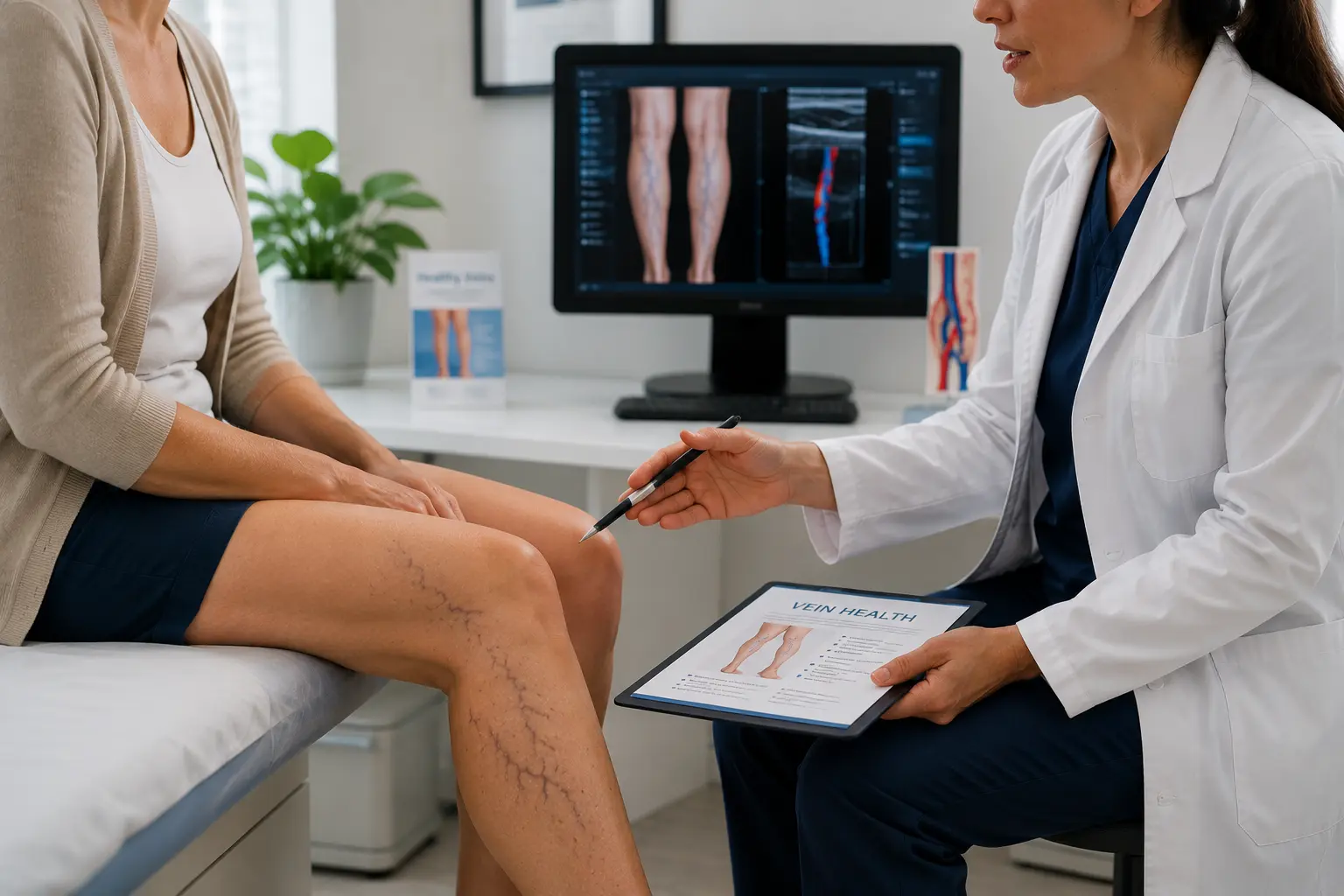
No Surprises: Your First Vein Appointment Explained
Many patients tell us they delayed seeking care for their varicose veins because they were not sure what a vein appointment would involve, whether it would be painful, or whether they would immediately be pushed into treatment. This guide walks you through exactly what happens during a first visit to Vein Treatment Centers of NJ in Hamilton — step by step, with no surprises.
Before You Arrive: What to Bring and Wear
To prepare for your consultation:
- Bring your insurance card and a photo ID
- Bring a list of current medications, including any blood thinners
- Wear loose, comfortable shorts or pants that can be rolled up to the mid-thigh — or be prepared to change into a gown
- Avoid applying lotion to your legs on the day of the appointment (it can interfere with ultrasound gel adhesion)
- If you currently wear compression stockings, bring them to show the provider
Step 1: Check-In and Medical History (10–15 minutes)
You will complete a brief intake form covering your vein symptoms, their duration and severity, relevant medical history (blood clots, prior vein procedures, family history of vein disease), and your lifestyle and occupation. This information helps Dr. Hadaya understand your complete clinical picture before the physical examination begins.
Step 2: Physical Examination of Your Legs (10 minutes)
Dr. Hadaya personally examines both of your legs — from the groin to the feet — in a standing position. He assesses:
- The location, size, and distribution of visible varicose veins
- The presence of spider veins and their relationship to the deeper system
- Skin changes: discoloration, thickening, eczema, or early ulceration
- Ankle swelling and its character
- Palpation of vein tenderness or hardness
You will also have the opportunity to point out specific veins or areas of concern that bother you most.
Step 3: Duplex Ultrasound Examination (30–45 minutes)
This is the most important part of the consultation — and what separates a vein specialist evaluation from a general practitioner visit. The duplex ultrasound is a non-invasive imaging test that uses sound waves to create a real-time image of the venous anatomy. Dr. Hadaya performs the ultrasound himself, scanning from the groin to the ankle on both legs.
The ultrasound evaluates:
- Valve competence: Does blood flow backward (reflux) in the saphenous veins?
- Vein diameter: Are the saphenous veins dilated beyond normal thresholds?
- Deep vein patency: Are the deep veins (femoral, popliteal) open and clear of clots?
- Perforator veins: Are any perforating veins transmitting pressure from the deep to superficial system?
The ultrasound is completely painless. Warm gel is applied to the skin and a probe is pressed lightly against the leg. You will typically lie down for most of the scan, then stand briefly while the probe is applied to provoke reflux.
Step 4: Results Review and Diagnosis (10 minutes)
Immediately after the ultrasound, Dr. Hadaya reviews the findings with you in plain language. He will show you images from the scan and explain:
- Whether you have venous reflux — and in which veins
- The clinical severity of your venous disease (using the CEAP classification system)
- Whether your symptoms are explained by the ultrasound findings
- Whether immediate intervention is needed or whether compression therapy and monitoring is the appropriate first step
Step 5: Personalized Treatment Plan (10 minutes)
If treatment is recommended, Dr. Hadaya will present your options — typically one or a planned sequence of minimally invasive procedures — and explain what each involves, how long it takes, what the recovery looks like, and what results to expect.
Our team then works with your insurance company to verify coverage and obtain pre-authorization. We explain your out-of-pocket costs clearly before any procedure is scheduled.
Will I Be Pressured Into Treatment?
No. At Vein Treatment Centers of NJ, we provide comprehensive information and a clear recommendation — but the decision to proceed with treatment is always yours. Many patients appreciate taking a day or two to consider the plan, discuss it with family, or review insurance details before scheduling. We are here to answer questions at every step.
Book Your Consultation in Hamilton, NJ
Our office is located at 994 White Horse Avenue, Hamilton Township, NJ 08610. We serve patients from across Mercer County, including Trenton, Princeton, East Windsor, Ewing, Lawrenceville, Bordentown, and Robbinsville, as well as Bucks County, PA. Call 609-585-4666 — Saturday hours available.
Related Articles
Ready to Address Your Vein Concerns?
Schedule a consultation with Dr. Hadaya to discuss your condition and explore treatment options.