
How to Prevent Varicose Veins: Evidence-Based Strategies From a NJ Vein Specialist
Medically reviewed by Dr. Z. Hadaya, MD
Vein Treatment Centers of NJ
Can Varicose Veins Be Prevented?
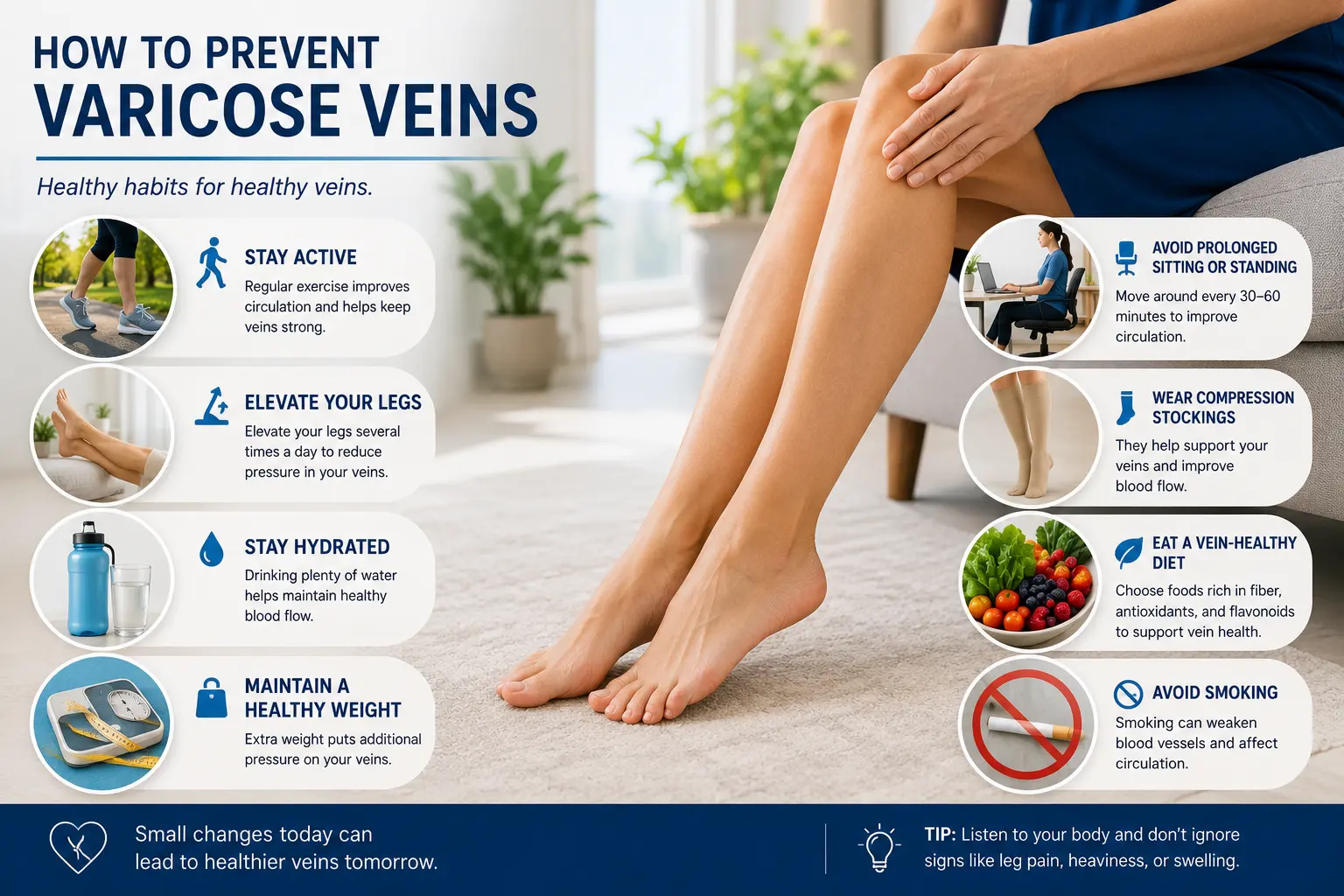
The honest answer is: it depends. If you have a strong genetic predisposition to varicose veins — two parents with significant venous disease, for example — some degree of vein valve deterioration over your lifetime is likely. What you can do is substantially reduce the rate of progression, delay the onset, minimize symptoms, and in some cases prevent varicose veins from developing in the first place. Here are the strategies that have the strongest evidence behind them.
1. Wear Medical-Grade Compression Stockings
Compression stockings are the most effective non-invasive tool for managing and preventing varicose veins. They work by applying graduated external pressure to the leg — tightest at the ankle, gradually decreasing toward the knee — which narrows the vein diameter, reduces reflux, and supports the calf muscle pump.
Who should wear them:
- People with a strong family history of varicose veins
- Pregnant women (throughout pregnancy, not just when symptoms appear)
- People in jobs requiring prolonged standing or sitting
- People who have had vein treatment (to prevent recurrence)
- Travelers on flights over 4 hours
Over-the-counter compression socks are better than nothing, but medical-grade stockings (prescribed at 20–30 mmHg or 30–40 mmHg by a vein specialist) provide substantially better compression gradients. Our Hamilton, NJ clinic can fit you properly.
2. Move — Frequently and Consistently
Physical activity is one of the most powerful preventive tools available. The calf muscle pump — activated every time you walk, bike, or climb stairs — is the primary driver of venous return from the lower legs. People who are sedentary for large portions of the day allow venous pressure to build unchecked hour after hour.
If you have a desk job, set an alarm to stand and walk for two to three minutes every hour. A simple habit of brief, frequent movement throughout the day is more effective than one 30-minute workout while sitting the rest of the time.
3. Maintain a Healthy Body Weight
Excess abdominal weight increases intra-abdominal pressure, which reduces the pressure gradient that drives blood from the legs back to the heart. It also promotes systemic inflammation that damages vein walls over time. Losing even 10–15 pounds in overweight individuals has been shown to reduce venous symptoms significantly.
4. Elevate Your Legs Daily
Elevating your legs above the level of your heart for 15–30 minutes each day allows gravity to assist venous drainage and decompress the vein walls. This does not need to be elaborate: lying on your back and resting your legs up against the wall (the yoga "legs up the wall" pose) is ideal. Evening leg elevation, particularly after a day of standing, can prevent the progressive vein wall stretching that leads to varicose vein development.
5. Avoid Prolonged Standing or Sitting Without Movement
If your job requires standing all day — nursing, teaching, retail, hair styling — take every opportunity to shift your weight, walk briefly, or at minimum rock back and forth on your heels and toes to activate the calf pump. Anti-fatigue mats and shoes with good arch support can also reduce venous strain.
If you sit for extended periods, avoid crossing your legs (which compresses the femoral vein), keep your feet flat on the floor, and make a point to walk at lunchtime and after work.
6. Stay Hydrated
Adequate hydration helps maintain appropriate blood viscosity (thickness). Dehydration thickens the blood, which increases the tendency for blood to stagnate in the lower legs and form clots. Aim for 6–8 glasses of water per day, and increase intake in hot New Jersey summers and during exercise.
7. Follow a Low-Sodium, High-Fiber Diet
High sodium intake promotes fluid retention, which worsens ankle swelling and increases the pressure load on vein walls. Reducing sodium to under 2,000 mg per day is beneficial for venous health. A high-fiber diet reduces constipation and straining, which increases intra-abdominal pressure — a chronic stressor on the leg veins.
Foods rich in bioflavonoids (citrus fruits, berries, dark chocolate) and vitamin C (bell peppers, broccoli) support vein wall integrity and reduce capillary fragility, though the clinical evidence for specific supplements is less strong than for the lifestyle changes listed above.
8. Don't Smoke
Smoking damages the endothelium (the inner lining of blood vessels), promotes inflammation and blood viscosity, and is a significant risk factor for both DVT and venous insufficiency. If you currently smoke, quitting is one of the highest-impact vascular health interventions available.
9. Consider Early Evaluation if You Have Risk Factors
Prevention is most effective when it begins before significant valve damage has occurred. If you have a family history of varicose veins, are pregnant or planning a pregnancy, or work in a high-risk occupation, a baseline duplex ultrasound at our Hamilton, NJ clinic can tell you whether your veins are already showing early signs of insufficiency — allowing for early intervention before the disease progresses.
Already Have Varicose Veins? Treatment Is Prevention
Once varicose veins are established, lifestyle measures slow the disease but do not reverse existing valve damage. The most effective way to prevent progression to serious complications — skin ulcers, DVT, superficial thrombophlebitis — is to treat the underlying venous reflux with a minimally invasive procedure. At Vein Treatment Centers of NJ, this means an in-office procedure that takes under an hour, covered by most insurance plans.
Call us at 609-585-4666 to schedule a consultation in Hamilton, NJ. We also serve patients from Princeton, Trenton, Freehold, New Brunswick, and throughout Central New Jersey and Bucks County, PA.
Related Articles
Ready to Address Your Vein Concerns?
Schedule a consultation with Dr. Hadaya to discuss your condition and explore treatment options.