The Dangerous Myth: "They're Just Cosmetic"
Every week, patients arrive at our Hamilton, NJ vein clinic having been told by a previous provider — or by well-meaning family members — that their varicose veins are "just cosmetic" and nothing to worry about. This is one of the most damaging myths in vein health. While it is true that varicose veins are not immediately life-threatening for most people, dismissing them as a cosmetic issue ignores the well-documented medical risks of leaving venous disease untreated.
What Varicose Veins Actually Are
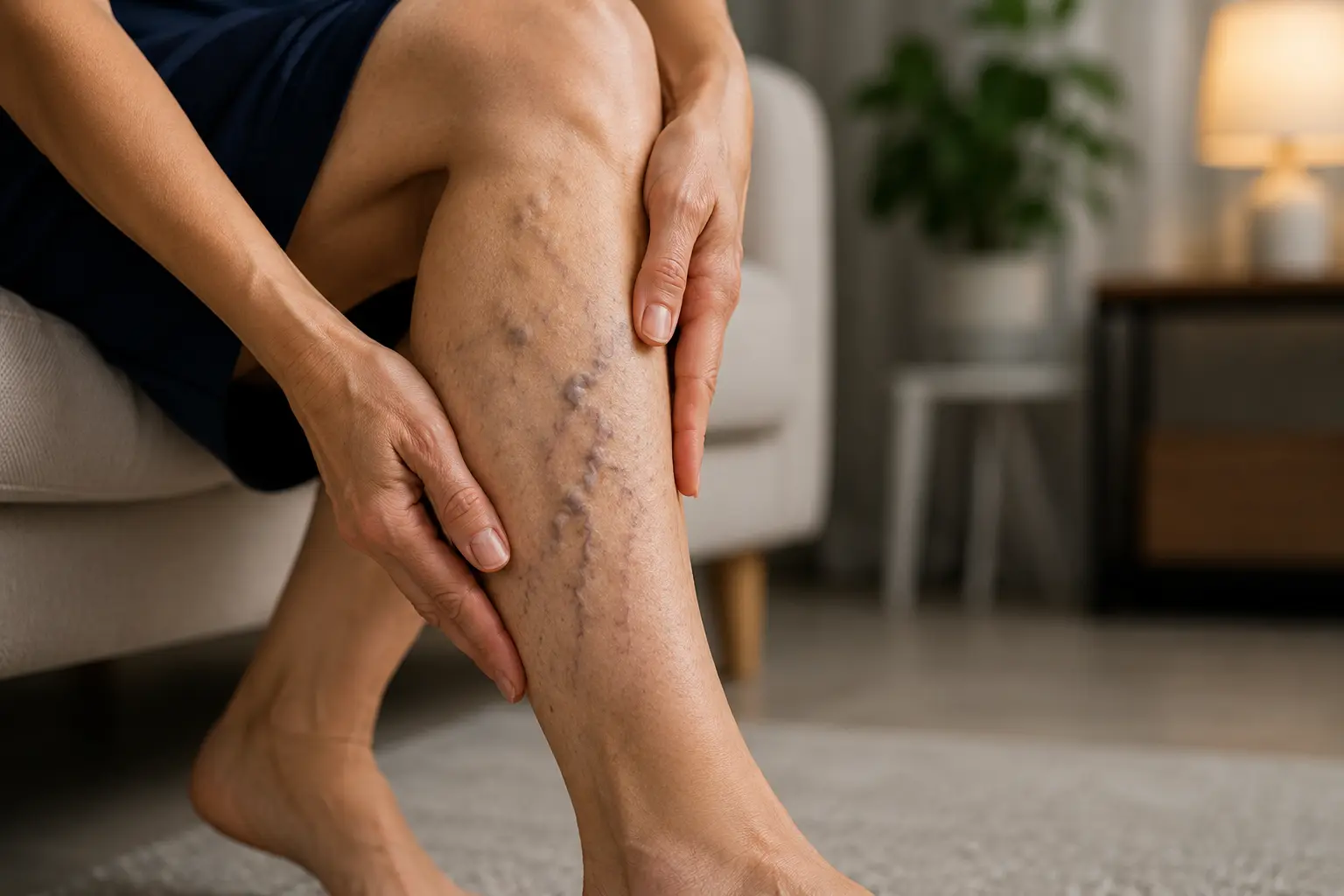
Varicose veins are a symptom of an underlying condition called chronic venous insufficiency (CVI) — a failure of the one-way valves inside the leg veins. When those valves stop working, blood flows backward (reflux) and pools in the lower legs. The increased pressure stretches the vein walls outward, creating the twisted, rope-like bulges visible under the skin. The pressure does not disappear when you treat the visible vein; it must be addressed at its source.
Medical Risks of Untreated Varicose Veins
1. Superficial Thrombophlebitis
Blood that pools in a varicose vein can clot, causing inflammation of the vein wall — a condition called superficial thrombophlebitis. The affected vein becomes painful, hard, red, and warm to the touch. While superficial clots are less dangerous than deep vein thrombosis, they are painful, can spread, and are a signal that your venous disease is progressing.
2. Deep Vein Thrombosis (DVT)
Patients with significant varicose veins and CVI have a meaningfully higher risk of developing DVT — blood clots in the deep venous system. DVT can cause permanent damage to the deep veins and, in the worst case, can travel to the lungs as a pulmonary embolism. Long periods of immobility (flights, surgery recovery) dramatically increase this risk for people who already have compromised venous circulation.
3. Venous Skin Ulcers
Venous ulcers are open wounds that develop on the lower leg — typically around the inner ankle — as a result of years of elevated venous pressure damaging the skin and underlying tissue. They are notoriously slow to heal, prone to infection, and represent a serious decline in quality of life. The critical fact: venous ulcers are almost entirely preventable with timely treatment of the underlying varicose veins and CVI.
4. Stasis Dermatitis
Stasis dermatitis is a skin condition caused by chronic venous hypertension. The skin around the lower leg and ankle becomes discolored (brownish or reddish), itchy, thickened, and fragile. Left untreated, it can progress to ulceration. It is a clear warning sign that vein disease has been present for a long time.
5. Spontaneous Bleeding
As varicose veins enlarge over time, the vein wall thins and can lie just beneath a very thin layer of skin. Minor trauma — even scratching — can cause sudden, significant bleeding. While this is not common, it is frightening when it occurs and underscores that varicose veins are not a purely aesthetic concern.
6. Chronic Pain and Reduced Mobility
The aching, heaviness, cramping, and restless legs associated with varicose veins progressively worsen over years. Many patients stop exercising, avoid social activities, and report that leg discomfort has measurably reduced their quality of life. The emotional and functional toll is real and well-documented in quality-of-life studies.
When Are Varicose Veins Primarily Cosmetic?
To be fair: small, flat varicose veins and spider veins that cause no symptoms are largely cosmetic. If you have tiny thread veins on your thighs that do not itch, ache, or swell, treating them is elective. The distinction matters because insurance companies typically cover treatment only when vein disease is medically symptomatic.
Does Insurance Cover Varicose Vein Treatment?
Yes — when the disease is documented as medically necessary. Medicare, Aetna, United Healthcare, Horizon Blue Cross Blue Shield, and Horizon NJ Health all cover procedures like Radiofrequency Ablation and EVLT when the patient has symptoms (pain, swelling, skin changes) and when reflux is confirmed on duplex ultrasound. At our Hamilton clinic, our team handles insurance pre-authorization to make the process as smooth as possible.
The Bottom Line
Varicose veins exist on a spectrum. They start as a cosmetic nuisance and, if left alone, can progress to a painful, medically significant disease. The smartest move is an early evaluation — a 30-minute ultrasound that tells you definitively whether your veins are a cosmetic issue or a medical one that deserves treatment.
Dr. Z. Hadaya and the team at Vein Treatment Centers of NJ offer free vein screenings at our Hamilton, NJ office. Call 609-585-4666 or book online today.
Continue Learning About Your Vein Health