Leg Pain at Night: When to Worry
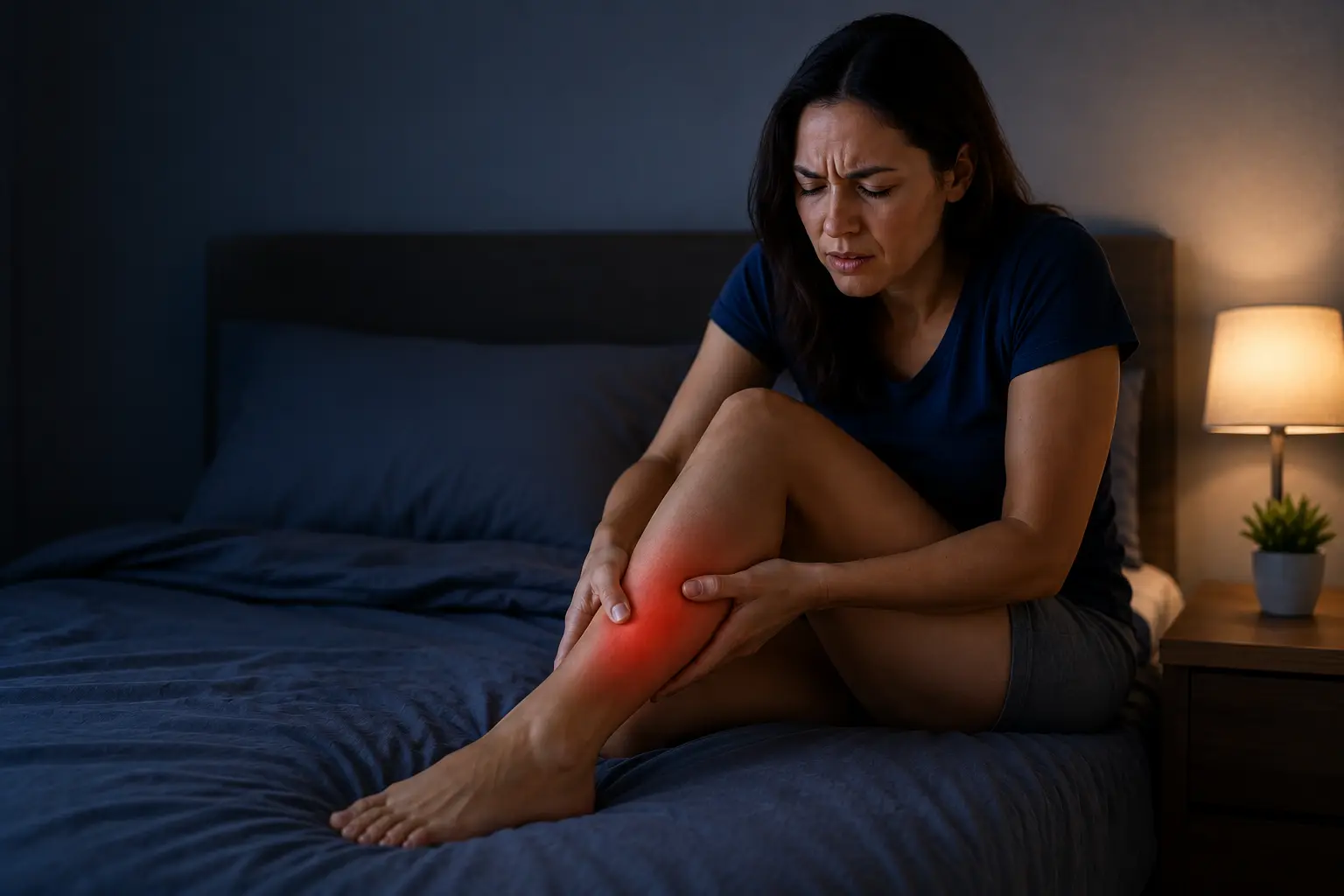
If you routinely wake up with aching, cramping, or throbbing in your legs, you are not alone. Nighttime leg pain is one of the most common complaints we hear at our Hamilton, NJ vein clinic — and it is also one of the most misunderstood. Many patients assume the discomfort is simply a sign of aging or over-exertion, but in a significant number of cases the root cause is a vein problem that can be diagnosed and treated.
The Most Common Causes of Nighttime Leg Pain
1. Chronic Venous Insufficiency (CVI)
Healthy veins have one-way valves that push blood upward toward the heart. When those valves weaken or fail — a condition called chronic venous insufficiency — blood pools in the lower legs throughout the day. By evening, that pooled blood has stretched the vein walls and built up pressure in the surrounding tissue. When you lie down at night and gravity is no longer helping, that pressure redistribution can trigger aching, heaviness, or cramping that disrupts your sleep.
CVI is the most common vein condition we treat at Vein Treatment Centers of NJ. It affects an estimated 40% of the U.S. population to some degree.
2. Restless Legs Syndrome (RLS) Linked to Vein Disease
Restless legs syndrome — that irresistible urge to move your legs, especially at night — has been closely linked to underlying venous insufficiency in multiple clinical studies. In a landmark trial published in the Journal of Phlebology, 98% of patients with both RLS and venous insufficiency experienced significant improvement in RLS symptoms after vein treatment. If you have been told you have RLS, it is worth ruling out a venous cause before starting medications.
3. Varicose Veins and Venous Hypertension
Varicose veins are dilated, twisted veins that carry elevated blood pressure throughout the day. That elevated pressure does not simply disappear when you get into bed. The inflammation and pressure in the vein wall can cause a dull, achy throb — particularly in the calf and behind the knee — that peaks in the evening and early nighttime hours.
4. Deep Vein Thrombosis (DVT)
While most nighttime leg pain has a benign venous cause, it is important to be aware of DVT — a blood clot in the deep veins of the leg. DVT pain is typically constant rather than positional, often accompanied by warmth, redness, and swelling in one leg. If you experience sudden, severe calf pain with swelling and redness, seek emergency care immediately. DVT is a medical emergency because a clot can travel to the lungs and become a pulmonary embolism.
5. Nocturnal Leg Cramps vs. Vein Pain
True nocturnal leg cramps (sudden, involuntary muscle contractions) are different from venous aching. Cramps are sharp, brief, and localized to a specific muscle — usually the calf. Venous pain tends to be diffuse, achy, and accompanied by a sense of heaviness or fullness in the entire lower leg. That said, venous insufficiency can make the leg muscles more susceptible to cramping due to impaired oxygen delivery.
Other Symptoms That Point to a Vein Problem
- Leg heaviness or fatigue that worsens throughout the day
- Swelling around the ankles and feet, especially in the evening
- Visible varicose or spider veins
- Skin discoloration or darkening around the ankles (stasis dermatitis)
- Itching or a burning sensation along the inner leg
If you recognize two or more of these symptoms alongside your nighttime leg pain, a vein evaluation is warranted.
What a Vein Evaluation Includes
At our clinic in Hamilton, NJ, Dr. Z. Hadaya begins every evaluation with a duplex ultrasound — a painless, non-invasive imaging test that maps your vein anatomy in real time. It takes 30–45 minutes and tells us exactly which valves are failing, where blood is pooling, and whether any clots are present. From that information we build a customized treatment plan.
Treatment Options for Venous Leg Pain
The good news: venous causes of leg pain are highly treatable with minimally invasive outpatient procedures. Depending on your ultrasound findings, Dr. Hadaya may recommend:
- Radiofrequency Ablation (RFA) — Uses heat energy to close the faulty saphenous vein. Covered by most insurance when medically necessary.
- Endovenous Laser Therapy (EVLT) — Similar to RFA; uses laser energy to seal diseased veins.
- VenaSeal — Medical-grade adhesive that closes veins with no heat and no compression stockings.
- Sclerotherapy — Injection treatment ideal for smaller varicose veins and spider veins.
- Microphlebectomy — Minimally invasive removal of bulging surface veins through micro-incisions.
Most patients notice a significant reduction in nighttime leg pain within two to four weeks of treatment.
When to See a Vein Specialist in NJ
Do not wait until the pain becomes unbearable. Venous disease is progressive — valves that are failing today will continue to deteriorate without treatment. Early intervention means simpler procedures, better outcomes, and a lower chance of developing serious complications like venous ulcers or DVT.
Vein Treatment Centers of NJ serves patients from Hamilton, Trenton, Princeton, Freehold, New Brunswick, and throughout Central New Jersey and Bucks County, PA. We offer free vein screenings and Saturday appointments. Call 609-585-4666 to schedule yours today.
Related Articles