
Vein Disease Risk Factors for Men in Hamilton, NJ
Medically reviewed by Dr. Z. Hadaya, MD
Vein Treatment Centers of NJ
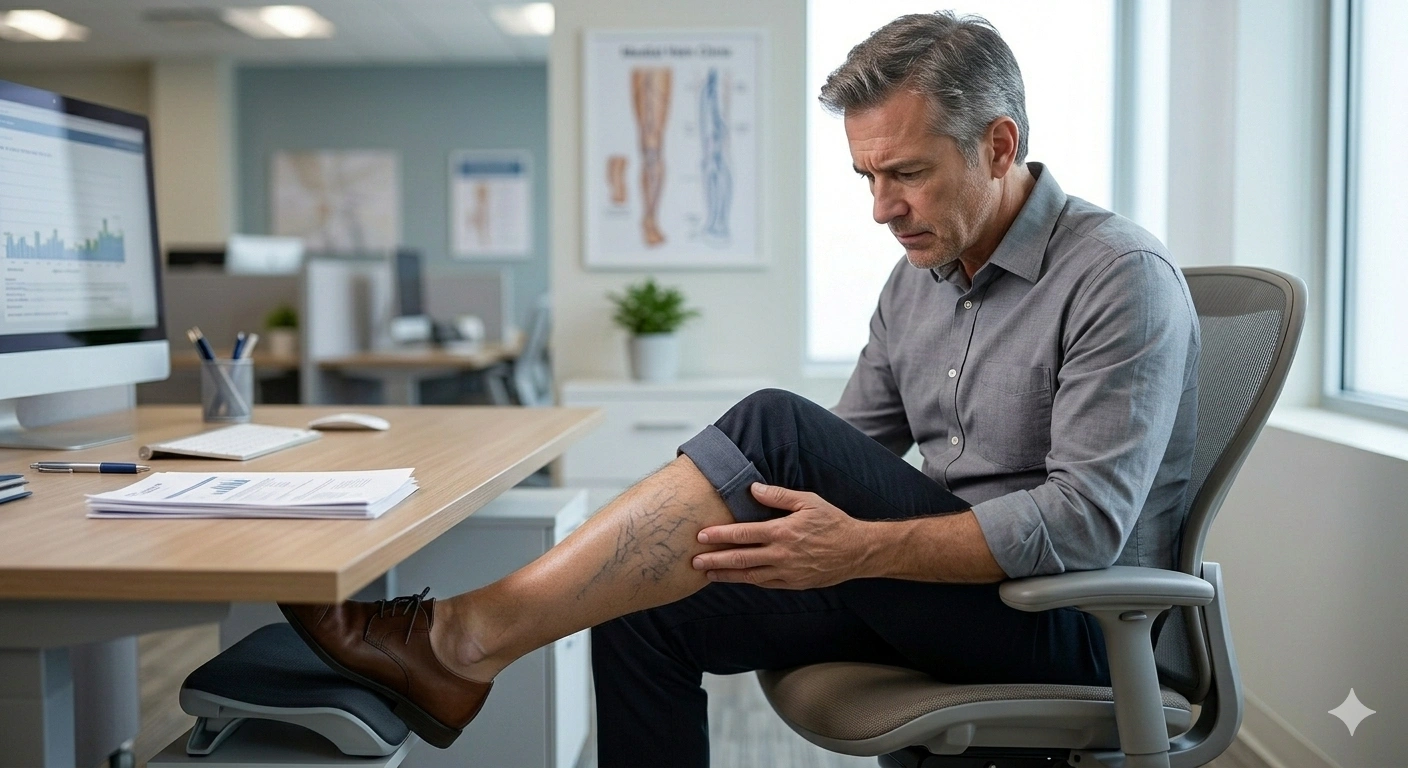
If you're a working man in Hamilton, Trenton, or the surrounding Mercer County area—whether you're a contractor on your feet all day, a dad chasing after kids, or a professional sitting at a desk for hours—you need to understand your risk factors for vein disease. The good news? Once you know your risks, you can take action to prevent complications.
Who's at Risk? Men in Hamilton and Beyond
Varicose veins and chronic venous insufficiency don't discriminate, but certain factors significantly increase your risk. If you check multiple boxes below, you should consider a vein evaluation—even if you don't have obvious symptoms yet.
Top Risk Factors for Men
1. Your Job Keeps You Standing
High-Risk Occupations:
- • Construction workers and contractors
- • Electricians and plumbers
- • Manufacturing and warehouse workers
- • Healthcare professionals (nurses, techs)
- • Retail workers and salespeople
- • Restaurant and hospitality staff
- • Teachers and professors
- • Security guards
- • Hairdressers and barbers
- • Mechanics and technicians
Why It Matters:
Standing for long periods increases pressure in leg veins. Gravity works against blood flow back to your heart, causing blood to pool in the lower legs. Over years, this weakens vein valves and walls.
2. Your Job Keeps You Sitting
High-Risk Occupations:
- • Office professionals and executives
- • Truck drivers and commercial drivers
- • IT professionals and programmers
- • Accountants and financial professionals
- • Customer service representatives
- • Writers, editors, and creative professionals
Why It Matters:
Prolonged sitting, especially with legs bent at 90 degrees, compresses veins behind the knees and restricts blood flow. Your calf muscles—which act as a "second heart" to pump blood up your legs—aren't engaged, leading to blood pooling.
3. Heavy Lifting is Part of Your Day
At-Risk Individuals:
- • Construction and laborers
- • Movers and delivery personnel
- • Gym enthusiasts and weightlifters
- • Warehouse workers
- • Landscapers and groundskeepers
Why It Matters:
Heavy lifting increases intra-abdominal pressure, which puts stress on leg veins. Repeated strain over time can damage vein valves, especially if you hold your breath during lifting (Valsalva maneuver), which further increases pressure.
4. Family History
If your father, mother, or siblings have varicose veins, your risk increases significantly. Genetics play a major role in vein valve strength and vein wall integrity.
What This Means:
You can't change your genetics, but knowing you're at higher risk means you should be proactive about prevention and seek early evaluation if symptoms develop.
5. Age Over 40
Vein disease becomes more common with age. The Edinburgh Vein Study found that prevalence increases dramatically after age 40, with approximately 40% of men over 50 affected.
Why Age Matters:
Years of gravity pulling on your veins, combined with natural weakening of vein walls and valves, makes vein disease more likely as you age. The wear and tear of decades of standing, sitting, and physical activity takes its toll.
6. Weight and Body Mass
Being overweight or obese increases pressure on leg veins and makes it harder for blood to flow efficiently back to the heart.
The Good News:
Weight is a modifiable risk factor. Even modest weight loss can significantly reduce symptoms and slow progression of vein disease.
7. Previous Leg Injury or Surgery
Past leg injuries, deep vein thrombosis (DVT), or leg surgeries can damage veins and valves, increasing your risk of developing varicose veins later.
8. Lack of Regular Exercise
Your calf muscles are crucial for pumping blood back up your legs. A sedentary lifestyle weakens this "muscle pump" and increases vein disease risk.
Simple Solution:
Regular walking, cycling, or swimming strengthens calf muscles and improves circulation. Even 30 minutes of daily walking can make a significant difference.
Special Considerations for Hamilton-Area Workers
Hamilton, Trenton, and Mercer County have diverse industries, each with unique vein health risks:
Regional Occupational Risks:
Healthcare Workers
With multiple hospitals and healthcare facilities in the area (Capital Health, St. Francis), many residents work long shifts on their feet in high-stress environments.
Government Employees
Trenton is the state capital. Many office workers sit for extended periods, increasing sedentary lifestyle risks.
Manufacturing and Distribution
The region has numerous warehouses and distribution centers along Routes 130 and 295. Workers combine prolonged standing with heavy lifting.
Construction and Trades
Growing residential and commercial development means many men work in physically demanding construction roles.
Prevention Strategies for High-Risk Men
You can't eliminate all risk factors, but you can minimize your risk with these strategies:
Daily Prevention Tips:
If You Stand All Day:
- • Shift weight between legs regularly
- • Take short walking breaks every hour
- • Consider compression socks (15-20 mmHg)
- • Elevate legs during breaks when possible
- • Stretch calf muscles throughout the day
If You Sit All Day:
- • Stand and walk for 5 minutes every hour
- • Do ankle circles and calf raises at your desk
- • Avoid crossing legs
- • Use a footrest to improve leg angle
- • Take stairs instead of elevator
If You Lift Heavy Objects:
- • Use proper lifting technique
- • Breathe normally (don't hold breath)
- • Consider compression stockings
- • Take breaks between heavy lifts
- • Strengthen core muscles
General Prevention:
- • Maintain healthy weight
- • Exercise regularly (walking, cycling)
- • Stay hydrated
- • Elevate legs when resting at home
- • Wear comfortable, supportive shoes
When to See a Vein Specialist
Don't wait until symptoms become severe. Schedule an evaluation if you experience:
- Visible, bulging veins on your legs
- Leg heaviness or fatigue, especially at end of day
- Aching or throbbing in your legs
- Nighttime leg cramps
- Swelling in ankles or calves
- Burning or itching sensations
- Skin discoloration or texture changes
- Restless legs that interfere with sleep
Working Men's Vein Clinic
At The Vein Doctor, we understand the demands of your job and family life. That's why we offer:
- Early morning and Saturday appointments
- Minimal time off work (most procedures take 30-45 minutes)
- Fast recovery (back to work in 1-2 days)
- Insurance accepted including Medicare
- Three convenient locations in Hamilton, New Brunswick, and Feasterville, PA
Don't let vein disease keep you from your work and family. Read why men should treat varicose veins early, or call today.
The Bottom Line for Working Men
Your occupation, lifestyle, and genetics may put you at higher risk for vein disease, but you're not powerless. Understanding your risk factors is the first step. Taking preventive measures and seeking early treatment when symptoms appear can keep you active, productive, and healthy for years to come.
Remember: The best time to address vein problems is before they become serious. Don't wait—your legs carry you through life. Take care of them.
Expert Vein Care Right Here in Mercer County, NJ
When you need vein treatment in Hamilton, NJ, you don't have to travel far for world-class care. Our vein center serves patients throughout Mercer County, including Trenton, Ewing, Lawrence, Princeton, and surrounding communities. Led by Dr. Hadaya, a board-certified vein specialist, our Hamilton facility combines advanced technology with personalized treatment plans. We understand the unique needs of New Jersey patients and provide convenient access to expert vein care right in your community.
People Also Ask About Vein Treatment in NJ
Is Varicose Vein Treatment Covered by Insurance in NJ?
Yes, in most cases! Unlike purely cosmetic procedures, medically necessary varicose vein treatment is typically covered by insurance. When varicose veins cause symptoms like pain, swelling, leg heaviness, or skin changes, treatment is considered medical rather than cosmetic. Our Hamilton clinic accepts major insurance plans including Aetna, Medicare, and Medicaid. We offer free insurance verification to help you understand your coverage before treatment. Our experienced team will work directly with your insurance provider to determine eligibility, obtain necessary pre-authorizations, and maximize your benefits.
What is the Recovery Time for Minimally Invasive Vein Procedures?
One of the biggest advantages of modern vein treatment in Hamilton, NJ is the minimal recovery time. Minimally invasive procedures like endovenous laser ablation (EVLA) and radiofrequency ablation typically take just 30-60 minutes and are performed in our comfortable outpatient facility. Most patients return to work within 1-2 days and resume normal activities immediately after treatment. You can walk out of our Hamilton office on your own. This is a dramatic improvement over traditional vein stripping surgery that required weeks of recovery, general anesthesia, and significant downtime. With modern techniques, you can treat your vein problems without disrupting your life.
What Happens During the Initial Vein Consultation at Our Hamilton, NJ Clinic?
Your first visit to our Hamilton, NJ vein center is comprehensive yet straightforward. Dr. Hadaya will conduct a thorough physical examination and discuss your symptoms, medical history, and treatment goals. A crucial step in your evaluation is a diagnostic venous ultrasound (vein mapping). This sophisticated imaging allows us to see beneath the skin surface, assess blood flow, and identify the root cause of your vein problems. The ultrasound is completely non-invasive and painless. Based on these findings, we'll create a personalized treatment plan and review all your options. We'll also provide transparent pricing information and handle your insurance verification. The consultation typically takes 45-60 minutes.
What Are the Risks of Ignoring Varicose Veins or Venous Insufficiency?
While many people view varicose veins as primarily a cosmetic concern, ignoring them can lead to serious medical complications. Untreated venous insufficiency progressively worsens over time. Complications can include painful venous leg ulcers that are difficult to heal, permanent skin discoloration and thickening (stasis dermatitis), recurring superficial thrombophlebitis (vein inflammation), and increased swelling and leg pain. In some cases, severe venous disease can contribute to the development of Deep Vein Thrombosis (DVT), a potentially serious condition involving blood clots in deep veins. The good news is that early treatment with minimally invasive procedures can prevent these complications entirely. If you're experiencing symptoms, don't wait—schedule a consultation with our Hamilton vein specialists today.
Ready to Address Your Vein Concerns?
Schedule a consultation with Dr. Hadaya to discuss your condition and explore treatment options.