
Say Goodbye to Spider Veins: The Ultimate Guide to Sclerotherapy
Medically reviewed by Dr. Z. Hadaya, MD
Vein Treatment Centers of NJ
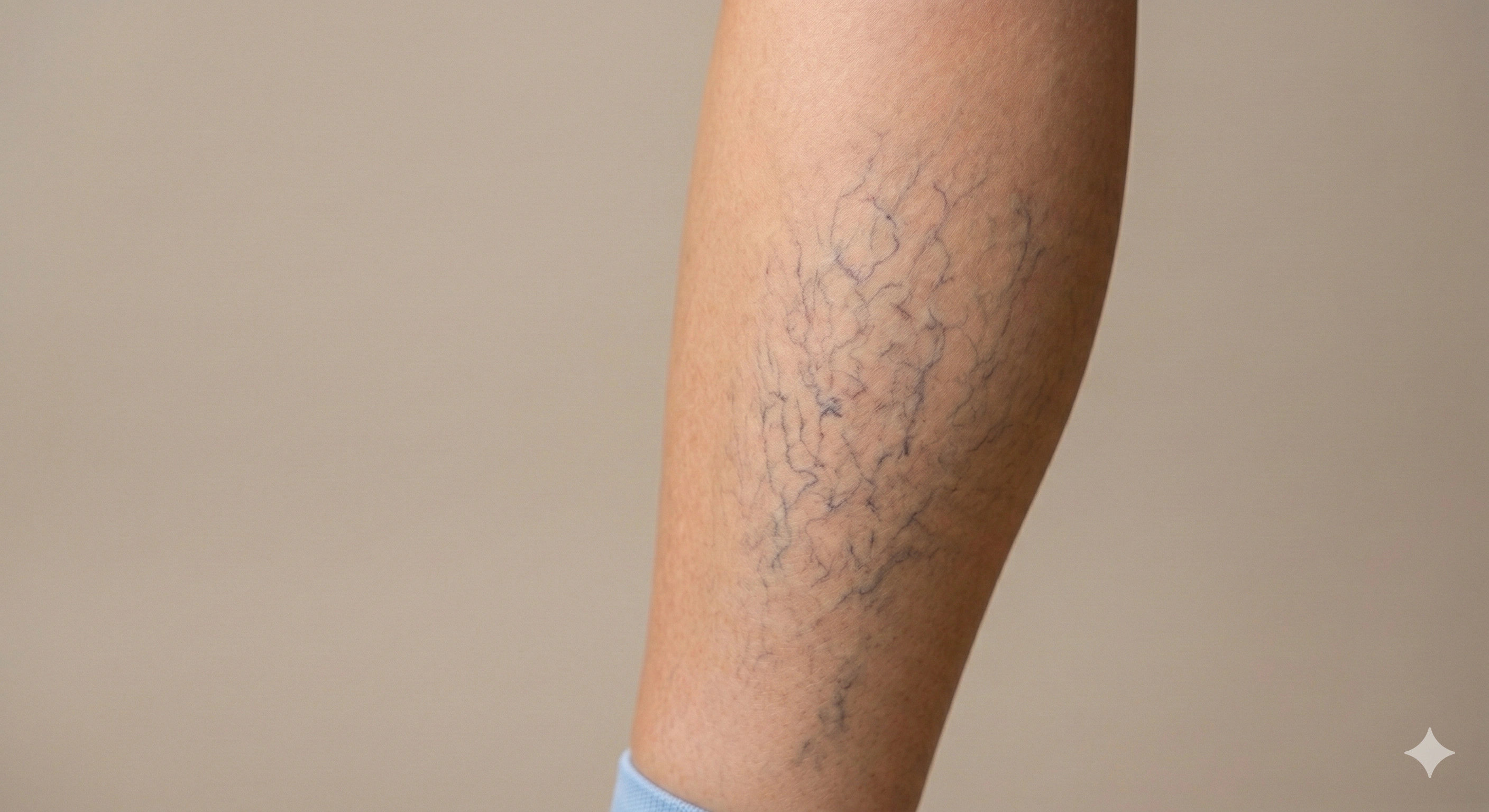
If you are researching treatments for spider veins or small varicose veins, you have almost certainly encountered the word sclerotherapy. It is the most widely performed, best-studied, and most effective treatment for these conditions — and it has been for nearly a century. Yet most patients arrive at Vein Treatment Centers of NJ with only a vague understanding of what the procedure actually involves, who is a good candidate, and what realistic results look like.
This comprehensive guide answers every question you need answered before scheduling your treatment.
What Are Spider Veins?
Spider veins (telangiectasias) are small, damaged blood vessels visible just beneath the skin's surface. They appear as thin red, blue, or purple lines, often in branching web or starburst patterns. Most commonly seen on the thighs, calves, and ankles, spider veins are extremely common — affecting an estimated 40% of women and 25% of men over 50.
While often dismissed as purely cosmetic, spider veins are sometimes an early indicator of underlying venous insufficiency. This is why a thorough evaluation with diagnostic ultrasound is an essential first step — treating surface spider veins while a deeper "feeder vein" continues to push blood into them guarantees recurrence.
What Is Sclerotherapy?
Sclerotherapy is an injectable procedure in which a specialized chemical solution (sclerosant) is injected directly into a targeted vein using an ultra-fine needle. The sclerosant irritates the inner lining of the vessel (the endothelium), causing it to swell, stick together, and ultimately seal shut. Over the following weeks, the treated vein is gradually broken down and reabsorbed by the body's immune system — fading from view completely.
The procedure was first developed in the 1930s and has been continuously refined ever since. Modern sclerosants, improved injection techniques, and the addition of ultrasound guidance have made it safer, more effective, and more precise than ever.
Types of Sclerotherapy We Offer
Liquid Sclerotherapy
The traditional form. The sclerosant is injected as a liquid directly into spider veins and small varicose veins. Ideal for fine spider veins close to the surface.
Foam Sclerotherapy
The liquid sclerosant is mixed with a small amount of gas to create a foam. Foam sclerotherapy has several advantages over liquid:
- The foam displaces blood from the vein, giving the sclerosant more direct contact with the vessel wall
- More effective for larger, deeper varicose veins and reticular (feeder) veins
- Visible on ultrasound, allowing guided treatment of veins that can't be seen from the surface
- Requires smaller volumes of sclerosant to achieve the same effect
Ultrasound-Guided Sclerotherapy
When spider veins are being "fed" by deeper, invisible reticular or saphenous tributaries, those feeder veins must be treated or the surface veins will return. Ultrasound-guided sclerotherapy uses real-time imaging to precisely target veins beneath the skin surface — the only way to address these root causes without surgery.
Cryo-Sclerotherapy
A specialized technique in which the sclerosant is cooled before injection, or a cooling device is applied during treatment. The cold provides natural local anesthesia, significantly reducing discomfort, burning sensations, and cramping. This approach is particularly valuable for patients treating large areas or those with heightened sensitivity. Learn more about cryo-sclerotherapy and its comfort advantages.
The Sclerotherapy Procedure: Step by Step
Before Your Session
- No lotion, oil, or moisturizer on the legs the day of treatment
- Wear or bring loose, comfortable clothing
- Bring your compression stockings if previously prescribed
- Stay well hydrated in the days before treatment
- Avoid anti-inflammatory medications (aspirin, ibuprofen) for 48 hours if possible
During the Procedure
- You will lie on a treatment table, legs slightly elevated
- Dr. Hadaya uses bright lighting and magnification to map the vein network
- Each spider vein cluster or varicose segment receives a precise injection through an ultra-fine needle
- You may feel a mild burning or cramping sensation during injection — typically brief and tolerable
- A single session typically involves 20–40 injections and takes 15–45 minutes
- No sedation or anesthesia is required — you are awake and comfortable throughout
After the Procedure
- You will walk immediately after treatment — walking activates calf muscles and promotes proper vein closure
- Compression stockings are applied and worn for 24–48 hours continuously (and during the day for 1–2 weeks)
- Resume all normal activities immediately
- Avoid intense exercise, hot baths, saunas, and direct sun on treated areas for 2 weeks
- Some redness, bruising, and temporary darkening of the treated veins is completely normal
What Results to Expect — and When
Sclerotherapy results are not instantaneous. Understanding the realistic timeline prevents disappointment:
- Days 1–3: Treated veins may look darker or bruised — this is a sign the treatment is working
- Weeks 1–4: Veins begin to fade as the immune system breaks them down
- Weeks 4–8: Significant improvement visible; most patients see 50–80% clearance after a single session
- Months 2–4: Final results become apparent as the last remnants of treated veins are reabsorbed
Most patients require 2–4 sessions for optimal clearance, spaced 4–6 weeks apart. The number of sessions depends on the extent and density of your spider veins, whether feeder veins are present, and your individual healing response.
Who Is a Good Candidate for Sclerotherapy?
Sclerotherapy is appropriate for most adults with spider veins or small-to-medium varicose veins. Ideal candidates:
- Have visible spider veins causing cosmetic concern or mild symptoms
- Have small reticular veins (feeder veins) visible as blue-green lines under the skin
- Have residual spider veins following RFA or EVLT treatment
- Are not pregnant (treatment should wait until after delivery)
- Have no active blood clots or history of severe DVT without anticoagulation
Not appropriate candidates include patients with active DVT, severe peripheral artery disease, known allergy to the sclerosant, or certain blood clotting disorders.
Sclerotherapy vs. Laser: Which Is Better?
Both treatments work. The better choice depends on your specific situation:
- Sclerotherapy is generally superior for leg spider veins, reticular veins, and any vein that can be injected
- Laser is preferred for facial spider veins, veins smaller than 0.3mm, and patients with needle phobia
- Combination treatment often delivers the best outcome for complex or widespread cases
Insurance Coverage and Cost
Cosmetic sclerotherapy for spider veins with no underlying venous insufficiency is typically not covered by insurance. However, when spider veins are associated with documented venous insufficiency and symptoms (aching, heaviness, swelling), sclerotherapy as part of comprehensive venous treatment may qualify for insurance coverage.
Our team at Vein Treatment Centers of NJ performs insurance verification before your procedure and ensures you have clear cost information upfront.
Schedule Your Sclerotherapy Consultation
Spider veins are common, but you don't have to live with them. Modern sclerotherapy is safe, fast, and remarkably effective when performed by an experienced specialist with the proper diagnostic foundation.
Ready for clear, confident legs? Contact the expert team at Vein Treatment Centers of NJ today at 609-585-4666 to schedule your sclerotherapy consultation. We serve patients throughout Hamilton, Trenton, Princeton, and all of Mercer County, NJ.
For informational purposes only. Not medical advice.
Ready to Address Your Vein Concerns?
Schedule a consultation with Dr. Hadaya to discuss your condition and explore treatment options.