
Spider Vein Laser Treatment: How It Works & What to Expect
Medically reviewed by Dr. Z. Hadaya, MD
Vein Treatment Centers of NJ
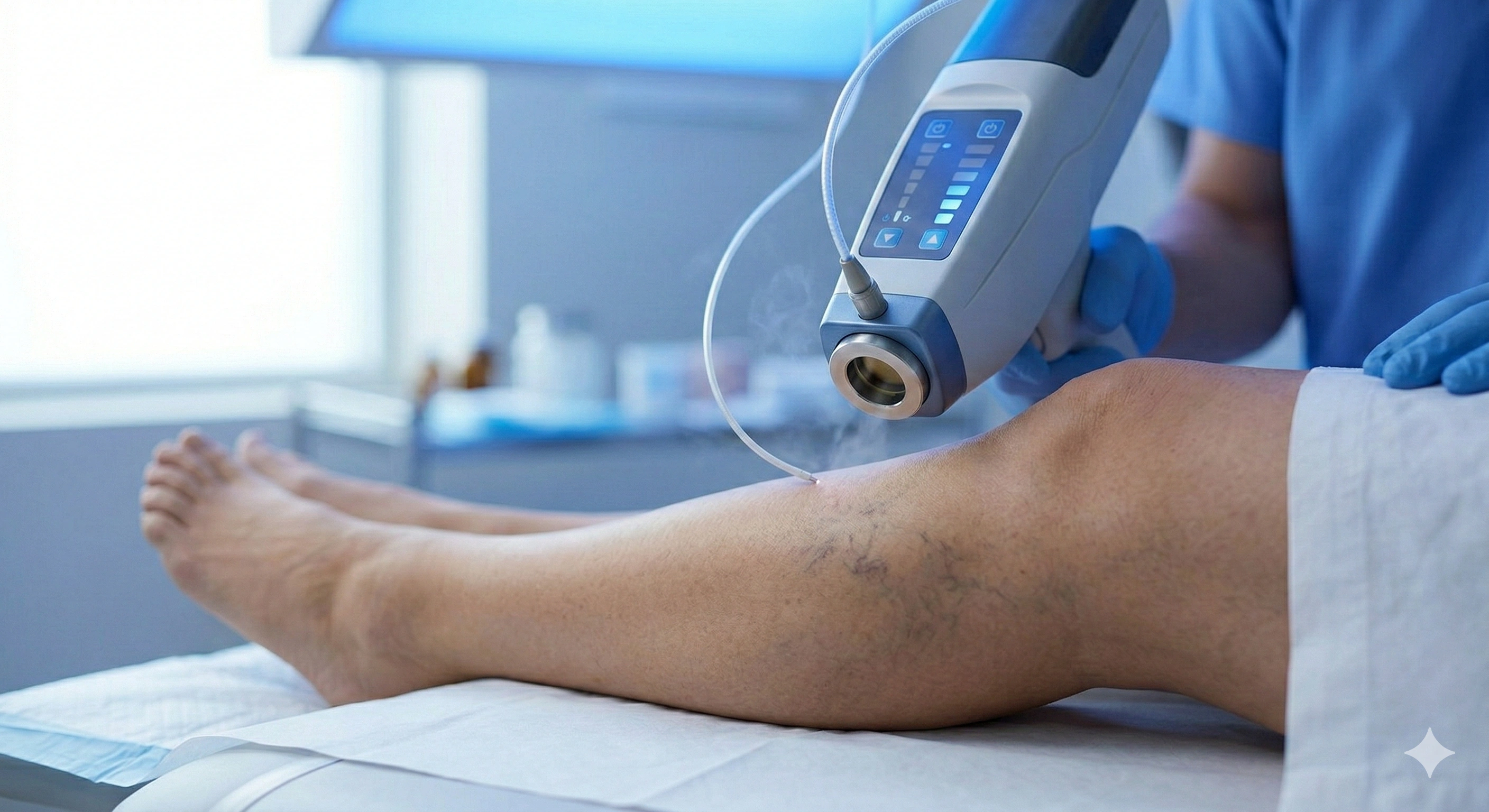
Spider vein laser treatment uses focused light energy to heat, collapse, and permanently seal damaged superficial blood vessels without incisions or needles. Over the following weeks, your body naturally reabsorbs the closed vein tissue, gradually clearing red and purple vascular webs from your skin. This non-invasive approach is especially effective for delicate vessels on the face and ultra-fine leg veins that cannot be easily treated with traditional injections.
How Spider Vein Laser Treatment Destroys Visible Vessels
Transdermal laser therapy relies on a biological mechanism known as selective photothermolysis. During a procedure, the laser delivers a specific wavelength of light that passes safely through the outer layers of skin and is selectively absorbed by the hemoglobin inside the targeted red blood cells.
Laser Light Energy -> Absorbed by Hemoglobin -> Thermal Coagulation -> Vessel Wall Closes -> Natural Body ReabsorptionWhen hemoglobin absorbs this concentrated light energy, it converts the light into precise heat. This thermal reaction coagulates the blood inside the vessel and causes the thin endothelial walls of the spider vein to collapse and stick together.
Because the wavelength specifically targets the pigment in the blood, the surrounding skin, fat, and muscle tissue remain protected from damage. Once the vessel closes, blood flow is immediately redirected deeper into healthy, functioning veins.
Over the course of several weeks to a few months, specialized immune cells called macrophages break down the sealed, non-functional vein tissue. The body slowly absorbs and eliminates these cellular fragments through the lymphatic system, leaving clear, even-toned skin behind.
Surface laser energy provides distinct advantages for specific clinical presentations:
- Facial Telangiectasias: Fine vessels around the nose, cheeks, and chin respond exceptionally well to light therapy because facial skin is thin and the underlying vessels are shallow.
- Micro-Spider Veins: Telangiectatic matting consists of reddish clusters of vessels so microscopic that even the smallest 30-gauge sclerotherapy needle cannot reliably enter their lumen.
- Delicate Anatomic Zones: Areas over bony prominences, such as the ankles or feet, can be treated with high precision.
Surface Laser vs. Endovenous Laser Therapy (EVLT)
Patients frequently confuse transdermal laser treatment with endovenous laser therapy (EVLT). While both use light energy, they address completely different stages and depths of vein disease:
- Surface Laser Therapy: Performed externally from outside the skin. The handpiece glides over the epidermis to treat micro-vessels, fine web patterns, and facial veins. It requires no incisions, catheters, or local tumescent anesthesia.
- Endovenous Laser Therapy (EVLT): A minimally invasive thermal ablation procedure used for larger, ropey varicose veins. A vein specialist inserts a thin laser fiber directly inside an incompetent saphenous vein through a micro-puncture to shut down high-pressure reflux deep beneath the surface.
Which Is Better: Sclerotherapy or Spider Vein Laser Treatment?
Both sclerotherapy and transdermal laser therapy are primary tools for resolving unwanted surface veins, but they shine in different scenarios. Sclerotherapy involves injecting a liquid or micro-foam sclerosant directly into the vein, chemically irritating the vessel lining so it seals shut.
In clinical vein care, sclerotherapy remains the preferred approach for treating medium-to-larger leg spider veins and their underlying blue feeder veins (reticular veins). Because the injected medication travels through connected branches, a single needle insertion can clear an entire network of interconnected veins.
Transdermal spider vein laser treatment becomes the superior choice when treating:
- Extremely fine vascular webs: Spider veins smaller than a needle tip.
- Facial veins: Sclerotherapy carries a risk of tissue necrosis or accidental migration into facial arterial pathways, making surface laser the gold standard for the face.
- Severe needle aversion: Patients who prefer light-based therapy over repeated injections.
| Comparison Factor | Transdermal Spider Vein Laser | Sclerotherapy Injections |
|---|---|---|
| Primary Indication | Facial telangiectasias, fine matting, needle-averse patients | Medium-to-large leg spider veins and reticular feeder veins |
| Mechanism of Action | Thermal collapse via targeted light energy | Chemical irritation via liquid or foam sclerosant |
| Needle Usage | None (completely non-invasive) | Uses micro-fine needles (30-gauge to 32-gauge) |
| Treatment Speed | Fast pulses across broad surface areas | Vessel-by-vessel cannulation and injection |
| Sensation | Brief snapping sensation paired with cooling | Mild pinprick followed by a slight localized sting |
| Typical Session Needs | Multiple staged sessions spaced weeks apart | Often fewer sessions needed for dense leg clusters |
| Deep Branch Reach | Limited to visible transdermal depth | Flows naturally into connected deeper tributary branches |
For patients seeking detailed insight on cost trade-offs and session requirements between both methods, our guide on sclerotherapy vs laser for spider veins cost outlines what to weigh before booking.
What to Expect Before, During, and After Your Laser Session
Understanding the procedural timeline helps ensure safe treatment and optimal cosmetic results.
Pre-Treatment Preparation
In the weeks leading up to your laser session, preparing your skin is essential to prevent adverse pigment changes:
- Avoid Sun Exposure: Do not tan or sit in direct sunlight for at least four weeks before treatment. Lasers target pigment; tanned skin contains excess epidermal melanin, which can absorb the laser energy and cause superficial burns or hyperpigmentation.
- Discontinue Self-Tanners: Stop applying sunless tanning lotions, sprays, or bronzers two to three weeks prior.
- Pause Active Skincare Products: If treating the face, suspend topical retinoids, glycolic acid, and other photosensitizing exfoliants for several days before your visit.
- Arrive With Clean Skin: Avoid applying moisturizers, body oils, lotions, or makeup to the treatment zone on the day of your appointment.
During the Procedure
Before beginning, we provide protective eyewear tailored to the specific wavelength of our laser system. As the provider guides the optical handpiece across your skin, the device delivers precise pulses of energy along each vessel.
Most patients describe the sensation as a quick, warm snap against the skin, similar to a rubber band flick. Modern systems incorporate integrated contact cooling tips or chilled air blowers that continually cool the epidermis before, during, and immediately after each pulse to keep you comfortable. A standard session typically takes between 15 and 30 minutes depending on the size of the treatment area.
Post-Treatment Healing and Recovery
Immediately after your session, the treated area will look slightly flushed. You may notice mild swelling resembling thin cat scratches along the path of the targeted vessels. This is a normal inflammatory response confirming that the vessel absorbed sufficient thermal energy.
Follow these direct post-care steps:
- Walk Immediately: Resume normal daily walking right away to maintain active circulation in your deep leg veins.
- Apply Cool Compresses: Use wrapped ice packs or cool gel pads for 10-minute intervals to calm localized warmth.
- Wear Daily Sunscreen: Apply a broad-spectrum mineral sunscreen (zinc oxide or titanium dioxide) over the treated skin daily to prevent post-inflammatory hyperpigmentation.
- Avoid High Heat: For the first 48 hours, avoid hot tubs, saunas, steaming baths, and heavy weightlifting routines that dramatically increase peripheral vascular pressure.
Potential Side Effects and Skin Care Precautions
While surface laser treatment is safe, mild side effects can occur:
- Redness and Swelling: Typically resolves within 24 to 72 hours.
- Temporary Darkening (Bronzing): Sealed blood inside the collapsing vessel may temporarily appear darker before fading completely over 4 to 12 weeks.
- Pigment Changes: Post-inflammatory hyperpigmentation (dark spots) or hypopigmentation (lightened patches) can develop, especially if the skin was recently sun-exposed. These changes are usually temporary but take time to balance.
- Blistering or Crusting: Rare when settings are properly calibrated to your skin type, but any small scabs should be left alone to heal naturally without picking.
Why an Underlying Ultrasound Evaluation Matters First
Treating spider veins purely as a surface cosmetic nuisance without checking deeper circulation is one of the most common reasons laser treatments fail.
In many individuals, surface spider veins are simply the visible overflow valve for a deeper, hidden circulation problem: chronic venous insufficiency. Inside healthy veins, tiny one-way valves keep blood flowing upward toward the heart. When these valves weaken, blood pools backward down the leg under gravity (venous reflux). This builds hydrostatic pressure that pushes outward into tiny surface capillaries, causing them to dilate into visible spider webs.
Damaged Saphenous Valves -> Venous Reflux -> Elevated Backward Pressure -> Feeder Reticular Veins -> Surface Spider Veins DilateIf you treat surface spider veins with transdermal laser without addressing the high-pressure feeder veins underneath, the high retrograde pressure will quickly reopen treated vessels or force adjacent micro-vessels to dilate into brand-new spider veins.
At our clinics, a board-certified specialist conducts a diagnostic ultrasound evaluation before building a treatment plan. This non-invasive vascular mapping visualizes your saphenous veins and deep venous junctions. If underlying reflux is present, closing the source veins first ensures that your surface cosmetic treatments deliver lasting results.
AI Vein Treatment NJ 2-2026 provides comprehensive vascular diagnostics to ensure every patient receives targeted care addressed to the true root cause of their vein symptoms.
Are You a Good Candidate for Laser Spider Vein Removal?
Transdermal laser therapy is an effective option for many patients, but it requires the right clinical indications:
- Good Candidates: Individuals with localized red or light-purple spider veins, facial telangiectasias, fine needle-resistant leg matting, healthy skin condition, and realistic expectations regarding the multi-week biological absorption timeline.
- When to Delay Treatment: Patients with an active suntan or sunburn, current pregnancy, active skin rashes or open infections over the target zone, or untreated severe venous reflux that is actively driving lower-extremity swelling.
If you also experience physical symptoms such as throbbing, heaviness, or visible leg swelling, our team can combine advanced laser vein removal with personalized cosmetic vein care and medical vein treatments.
We evaluate and treat patients across our New Jersey and Pennsylvania clinics in Hamilton, New Brunswick, and Langhorne. Contact us today to arrange a consultation and ultrasound assessment.
Frequently Asked Questions
Does laser really work for spider veins?
Yes, transdermal laser therapy is clinically proven to destroy fine, superficial spider veins and facial telangiectasias. The laser heats the hemoglobin to collapse and seal the vessel walls. Once sealed, your immune system gradually breaks down and reabsorbs the vessel over several weeks, resulting in visible cosmetic clearance.
Is it worth removing spider veins?
For most patients, removing spider veins is worthwhile for both aesthetic confidence and physical comfort. While spider veins are often considered cosmetic, they can cause localized burning, stinging, or aching sensations. When combined with a vascular ultrasound to rule out underlying valve failure, treatment provides both cosmetic improvement and symptom relief.
How many laser sessions will I need to see clear skin?
Most patients require two to four laser sessions spaced four to six weeks apart to achieve full clearance. The exact number depends on vessel diameter, overall density, depth within the dermis, and how rapidly your body reabsorbs coagulated vascular tissue.
Does spider vein laser treatment hurt?
The procedure involves minimal discomfort. Most patients describe each pulse as feeling like a brief, hot rubber band snap against the skin. Modern medical vein lasers use integrated skin-cooling handpieces or continuous chilled air streams to soothe the epidermis immediately before and after each pulse, keeping the session comfortable.
Ready to Address Your Vein Concerns?
Schedule a consultation with Dr. Hadaya to discuss your condition and explore treatment options.