
Beyond Aesthetics: Why 2026 Is the Year to Prioritize Circulation
Medically reviewed by Dr. Z. Hadaya, MD
Vein Treatment Centers of NJ
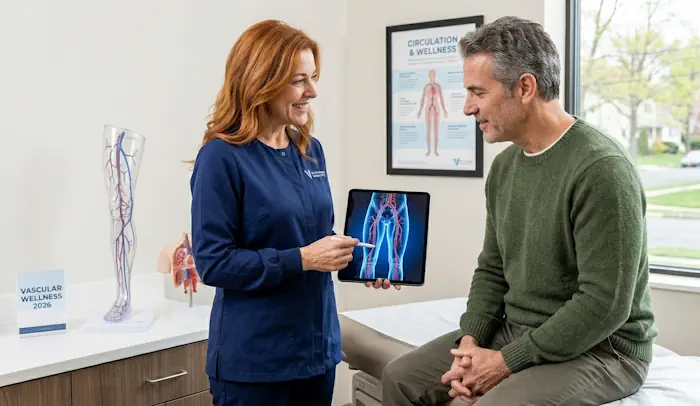
For years, patients walked into vein clinics with one concern: appearance. Bulging varicose veins or the faint purple web of spider veins felt embarrassing, something to hide under long pants and dark stockings. But 2026 is bringing a profound shift in how Americans — and New Jersey residents in particular — understand vein disease. Today, the conversation is no longer just about how your legs look. It is about how they feel, how they function, and what poor circulation is quietly doing to your overall health.
The Vascular Health Trends Reshaping 2026
Leading vascular specialists are seeing a measurable rise in patients presenting with circulation-related complaints: persistent leg fatigue, nighttime cramping, unexplained ankle swelling, and that relentless urge to move the legs that disrupts sleep. Restless leg relief in NJ has become one of the most searched health queries in the region — and for good reason. Restless legs are frequently a symptom of underlying venous insufficiency, not simply a neurological quirk.
The American Vein and Lymphatic Society reports that chronic venous disease affects an estimated 40% of adults in the United States, yet the majority remain undiagnosed or undertreated. As awareness grows through social media, patient advocacy, and improved diagnostic tools, more people are taking action earlier — before complications like venous ulcers or deep vein thrombosis develop.
Fast Facts: Vein Health in 2026
• Chronic venous insufficiency affects up to 40% of U.S. adults
• Restless legs are a known symptom of vein disease in 22% of cases
• Left untreated, venous insufficiency can lead to skin changes, ulcers, and DVT
• VenaSeal is a non-thermal, non-tumescent procedure with same-day recovery
• Most insurance plans cover medically necessary vein treatment in NJ
Recognizing Chronic Venous Insufficiency Symptoms Before They Worsen
Chronic venous insufficiency (CVI) occurs when the valves inside your leg veins stop closing properly, allowing blood to pool rather than return efficiently to the heart. The early symptoms are easy to dismiss: a heaviness in the legs after standing, mild swelling by day's end, or skin that feels itchy or tight around the ankles. Over time, these progress into more serious signs — skin discoloration, hardening of the tissue (lipodermatosclerosis), and open wounds that resist healing.
At Vein Treatment Centers of NJ, Dr. Hadaya uses duplex ultrasound imaging to map the exact location of faulty valves and reflux patterns. This diagnostic precision means treatment is targeted, efficient, and covered by most insurance plans when medically indicated. If your legs ache, swell, or cramp — especially after long periods of sitting or standing — those sensations are your circulatory system asking for help.
VenaSeal New Jersey: The Treatment Redefining Patient Comfort
Among the most exciting advances in vascular health trends for 2026 is the continued adoption of VenaSeal — a medical adhesive that permanently closes diseased veins without heat, needles along the vein, or compression stockings after treatment. Unlike radiofrequency ablation or laser therapy, VenaSeal requires no tumescent anesthesia, which means fewer injections, less bruising, and a significantly more comfortable experience.
Patients treated with VenaSeal at our Hamilton, NJ clinic typically return to normal activity the same day. There is no downtime, no bandaging protocol, and no need to wear medical-grade compression for weeks. For busy professionals, parents, and athletes in New Jersey and Bucks County, PA, this represents a genuine quality-of-life upgrade — not just a cosmetic fix.
Why Waiting Is No Longer the Safe Option
One of the most persistent myths in vein care is that it is better to "wait and see." For purely cosmetic spider veins with no underlying reflux, watchful waiting may be reasonable. But for patients with chronic venous insufficiency symptoms — including swelling, skin changes, or restless legs — delay carries real risk. Venous hypertension builds pressure that damages tissue over time. What begins as a heavy, tired feeling can evolve into a wound that takes months to heal and carries serious infection risk.
The good news: treatment today is faster, safer, and less invasive than ever before. A consultation at Vein Treatment Centers of NJ takes less than an hour. Ultrasound mapping is performed on-site. Insurance verification is handled by our team. Most patients begin treatment within days of their first visit.
2026 is not the year to settle for aching, swollen, restless legs. It is the year to take circulation seriously — because your vascular health is the foundation of how you move through the world.
Ready to take the first step? Schedule your free vein screening with Dr. Hadaya at Vein Treatment Centers of NJ. Call us at (609) 905-6440 or request a consultation online. Same-week appointments available in Hamilton, NJ.
Ready to Address Your Vein Concerns?
Schedule a consultation with Dr. Hadaya to discuss your condition and explore treatment options.