
Varicose Vein Treatment Near Me: Procedure & Care Guide
Medically reviewed by Dr. Z. Hadaya, MD
Vein Treatment Centers of NJ
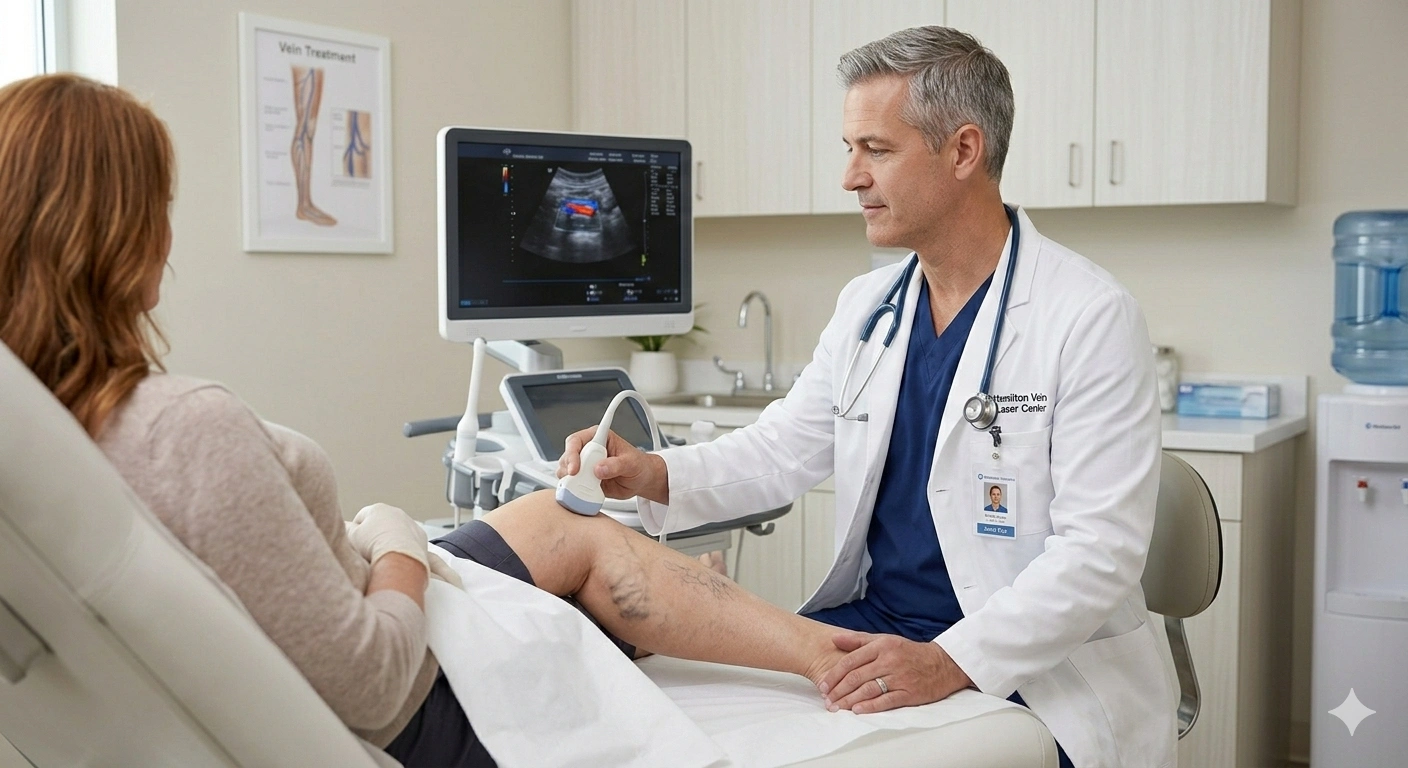
If you are searching for varicose vein treatment near me, modern clinical care involves outpatient, minimally invasive procedures designed to eliminate diseased veins and restore healthy leg circulation. Treatments such as radiofrequency ablation, medical adhesive closure, and microphlebectomy take under an hour in an office setting and allow you to resume daily activities immediately. Successful treatment begins with identifying whether your visible leg veins are accompanied by underlying venous insufficiency so that care targets the root vascular source.
Recognizing When Varicose Veins Require Medical Treatment
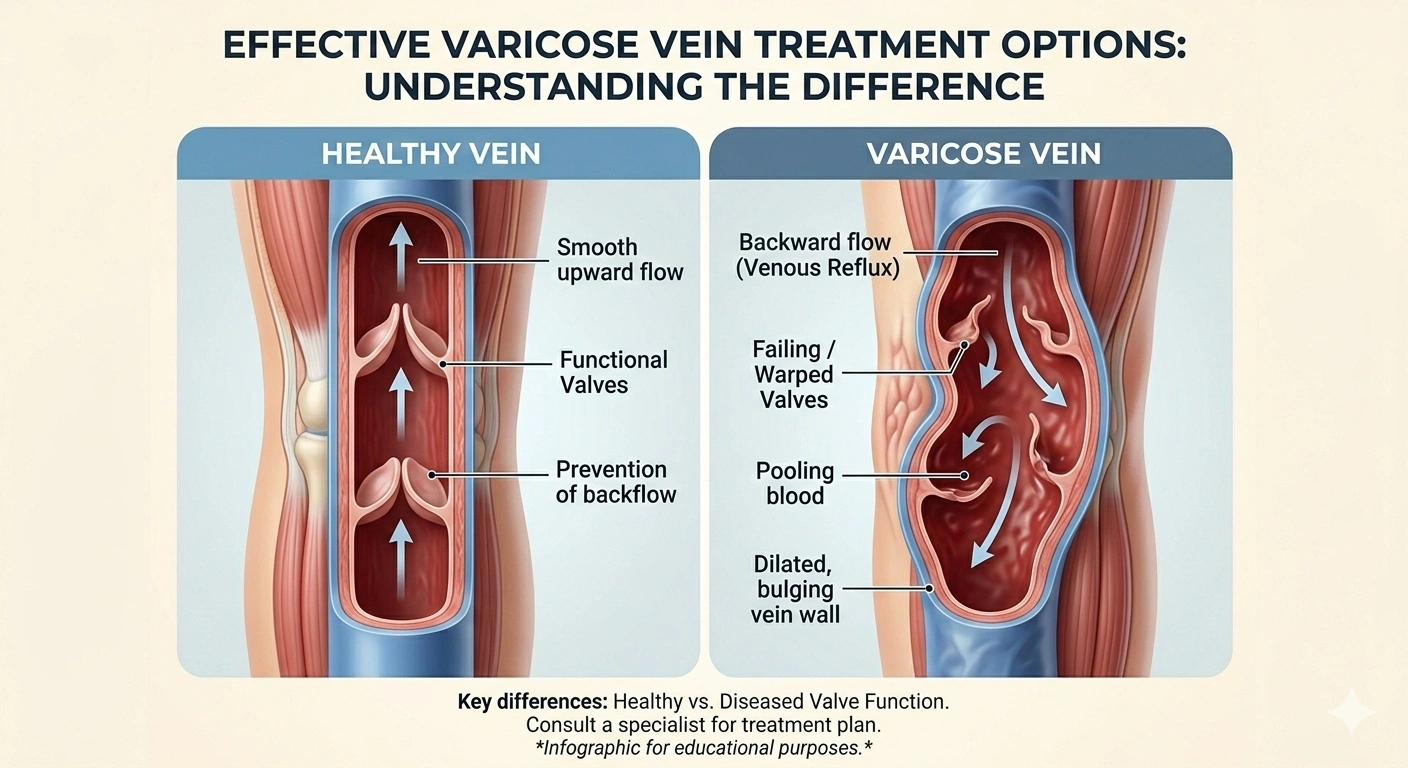
Varicose veins are dilated, twisted blood vessels that bulge above the skin surface, most commonly occurring along the calves and thighs. While small spider veins are primarily a cosmetic concern within the superficial capillary network, bulging varicose veins often indicate an underlying malfunction known as chronic venous insufficiency (CVI). In a healthy circulatory system, one-way valves inside leg veins open to let blood travel upward toward the heart and close tightly to prevent it from sliding backward. When these valves stretch, weaken, or fail, gravity pulls blood downward, causing it to pool inside the lower leg veins.
Healthy Vein: [Valve Closed] --> Normal upward flow, no backward pooling Diseased Vein: [Valve Failed] --> Retrograde flow (reflux) --> Venous pooling & bulgeCommon Warning Signs of Venous Insufficiency
Many patients delay care because they assume visible veins are simply a normal consequence of aging or prolonged standing. However, venous reflux creates progressive mechanical pressure within the venous tree that produces distinct physical symptoms over time.
- Persistent aching and heaviness: A deep, tired ache in the lower legs that intensifies toward the end of the day or after long periods of sitting or standing.
- Localized swelling (edema): Fluid retention around the ankles and lower calves that often subsides overnight when legs are elevated. Learn more about managing leg swelling.
- Restless legs and nocturnal cramps: Sudden muscle contractions or an irresistible urge to move your legs when resting in the evening.
- Skin changes and stasis dermatitis: Reddish-brown skin discoloration around the ankles caused by red blood cells leaking into surrounding tissue under high pressure.
- Venous stasis ulcers: Open sores near the ankle bone that struggle to heal on their own due to compromised microcirculation and tissue oxygenation.
Understanding when should you see a vein specialist helps prevent early-stage venous reflux from progressing to chronic skin breakdown or localized blood clots.
Why Ultrasound Diagnostics Come First
Visual examination alone cannot determine which saphenous trunks or perforator veins are failing beneath the skin. A dedicated vascular evaluation requires an in-office duplex ultrasound performed while you are standing. Standing forces gravity to act on the column of blood inside your legs, allowing the sonographer to capture real-time images of blood flow velocity and direction.
During an ultrasound evaluation, the vascular specialist checks for retrograde flow (reflux) lasting longer than normal physiologic thresholds and measures the exact diameter of the greater saphenous vein, small saphenous vein, and accessory branches. This diagnostic map serves as the precise architectural blueprint for your personalized treatment plan.
Modern Varicose Vein Treatment Options: How Each Procedure Works
Vascular medicine has moved entirely away from invasive hospital-based vein stripping. Today, diseased veins are sealed shut or removed through pinhole access sites using local anesthesia, leaving surrounding healthy tissue unharmed. Once an incompetent vein is closed, your body naturally reroutes blood flow through deeper, healthy veins.
| Procedure | Energy / Mechanism | Primary Target Vein | Anesthesia Required | Compression Post-Care |
|---|---|---|---|---|
| Radiofrequency Ablation (RFA) | Thermal (Heat energy) | Truncal saphenous veins | Local / Tumescent | Yes (1–2 weeks) |
| Endovenous Laser (EVLT) | Thermal (Laser light) | Truncal saphenous veins | Local / Tumescent | Yes (1–2 weeks) |
| VenaSeal Closure | Medical Adhesive (Glue) | Truncal saphenous veins | Single local numbing site | None to minimal |
| Microphlebectomy | Physical extraction | Bulging surface tributaries | Local infiltration | Yes (Several days) |
| Sclerotherapy | Chemical sclerosant / Foam | Spider & reticular branches | None needed | Yes (Several days) |
Thermal Ablation (RFA and EVLT)
Thermal ablation remains the clinical standard for sealing large, straight truncal veins like the great saphenous vein. Under ultrasound guidance, a thin catheter is inserted into the diseased vein through a tiny entry site near the knee or calf.
Before heat is applied, a diluted local anesthetic solution (tumescent anesthesia) is injected around the outside of the vein. This fluid collar serves three functions: it numbs the surrounding area, compresses the vein wall tightly against the heating element, and acts as a heat sink to protect adjacent skin and nerves. Once positioned, the catheter delivers uniform thermal energy (via radiofrequency current or targeted laser wavelengths), causing the collagen in the vein wall to contract and permanently collapse the lumen.
Non-Thermal Closure (VenaSeal and Microphlebectomy)
For patients who prefer to avoid multiple needle sticks from tumescent anesthesia or who cannot easily wear tight compression stockings, non-thermal alternatives provide effective solutions:
- VenaSeal Medical Adhesive: This approach delivers small amounts of proprietary medical cyanoacrylate glue along the length of the saphenous vein via a microcatheter. As gentle external ultrasound transducer pressure is applied, the adhesive polymerizes, holding the vein walls together until the vessel transforms into fibrous tissue. Because no heat is generated, tumescent fluid is not needed, and mandatory post-procedure compression garments are often unnecessary.
- Microphlebectomy: While thermal ablation addresses deep truncal reflux, it does not immediately flatten large, ropey surface veins. Microphlebectomy directly removes these bulging branches through micro-punctures as small as a pen tip. The physician uses a specialized surgical hook to gently extract the diseased segments under local numbing. The punctures require no stitches and heal with negligible scarring.
Sclerotherapy and Cryo-Sclerotherapy
Residual surface veins, branching reticular networks, and spider veins are treated using chemical closure. A liquid or foamed sclerosant medication is injected directly into targeted vessels using fine-gauge needles. The sclerosant displaces blood, irritates the endothelial lining, and causes the vessel walls to stick together. For deeper branch vessels hidden below the skin surface, ultrasound-guided foam sclerotherapy allows the physician to monitor the medicine’s dispersion in real time. Cryo-sclerotherapy pairs these injections with localized chilled air blown across the skin to maximize patient comfort and reduce transient inflammation.
What Type of Doctor Is Best for Varicose Veins?
Choosing the right specialist is the most critical step when evaluating options for varicose veins. Because venous disease is a progressive vascular pathology rather than a surface cosmetic issue, your provider must possess deep diagnostic and interventional training.
Key Qualifications to Check Before Booking
When researching local vein clinics, confirm the following credentials:
- Specialized Board Certification: Look for physicians board-certified in vascular surgery, interventional radiology, or venous and lymphatic medicine. These specialties require rigorous residency and fellowship training dedicated to vascular anatomy, hemodynamic physics, and complication management.
- Accredited Vascular Imaging: Reliable treatment depends entirely on accurate imaging. Inquire whether the practice operates an accredited vascular testing facility (such as accreditation through the Intersocietal Accreditation Commission, or IAC), which ensures sonographers adhere to strict diagnostic standards.
- Dedicated Procedural Experience: Ask your doctor how many thermal and non-thermal vein closures they perform weekly. High-volume specialists develop the tactile precision needed to treat tortuous vessels while protecting peripheral nerves.
Dedicated Specialist Care vs. Commercial Med Spas
Many commercial aesthetic centers and medical spas now market spider vein and varicose vein removal alongside cosmetic injections and laser skin treatments. However, these facilities often lack the vascular ultrasound diagnostic equipment needed to discover underlying truncal reflux.
Treating surface veins with aesthetic lasers while ignoring failing saphenous valves beneath them leads to rapid recurrence, as high hydrostatic pressure forces nearby healthy capillaries to dilate. A dedicated medical practice evaluates your complete circulatory flow, treating root reflux before refining surface tributaries. When choosing Vein Treatment Centers of NJ, patients receive comprehensive diagnostic evaluations and physician-directed vascular interventions tailored to long-term circulatory health.
Insurance Coverage and Medical Necessity for Vein Care
A frequent question for patients seeking varicose vein treatment near me is whether health insurance covers modern vein procedures. Unlike purely cosmetic treatments, therapeutic vein care for symptomatic disease is recognized as a functional medical necessity by major commercial insurers and Medicare.
Diagnostic Duplex Scan --> Documented Symptoms --> Trial of Conservative Care --> Carrier Pre-Authorization --> In-Office TreatmentWhat Makes Vein Treatment Medically Necessary?
Insurance carriers such as Horizon Blue Cross Blue Shield, Aetna, UnitedHealthcare, Cigna, and Medicare maintain clear clinical coverage guidelines. To qualify for coverage, clinical documentation must demonstrate:
- Objective physical symptoms: Documented aching, throbbing, chronic swelling, skin breakdown, or bleeding that interferes with daily functional activities.
- Ultrasound confirmation of reflux: Standing duplex ultrasound documentation confirming retrograde flow duration exceeding standard clinical diagnostic cutoffs in the targeted vein.
- Vein diameter measurements: Proof that the diseased saphenous or tributary vein meets minimum size requirements established by your insurer's policy.
Navigating Pre-Authorizations and Conservative Management
Most private insurance policies require a documented period of conservative management before they will authorize interventional procedures like RFA or microphlebectomy. This conservative phase typically includes:
- Daily wear of medical-grade graduated compression stockings (usually 20–30 mmHg).
- Regular low-impact walking regimens to activate calf muscle pumps.
- Periodic leg elevation above heart level during periods of rest.
- Modification of prolonged standing or sitting habits at work.
If conservative measures fail to resolve your symptoms, your vein center submits your ultrasound report, clinical visit notes, and conservative trial timeline to your insurer for pre-authorization. Once approved, your out-of-pocket expenses depend on your individual plan’s annual deductible, co-insurance percentages, and specialist co-pays.
What to Expect: From Initial Consultation Through Recovery
Knowing what happens during your care pathway removes uncertainty and helps you prepare effectively for your appointment.
Your Treatment Day Timeline
Modern vein treatments require no hospital stays, intravenous sedation, or fasting. Here is the standard procedural flow:
- Check-In and Pre-Scan: You arrive at the office in comfortable, loose clothing. Your physician uses ultrasound to map and mark the treatment path directly on your skin.
- Local Anesthetic Administration: The skin entry site is cleansed and numbed with a small local injection. For thermal procedures, tumescent numbing fluid is gently introduced around the vessel under continuous ultrasound visibility.
- Catheter Closure or Extraction: The catheter or delivery sheath is inserted, and the vein is treated incrementally. Patients generally feel a sensation of light pressure or movement, but sharp pain is prevented by the local anesthetic.
- Bandaging and Immediate Ambulation: Entry sites are dressed with small adhesive bandages, and a compression stocking or wrap is applied if required for your specific procedure. You immediately get up from the treatment table and walk for 10 to 15 minutes in the recovery area before driving yourself home.
Post-Procedure Healing and Activity Guidelines
Post-procedure recovery is rapid because the interventions create minimal soft tissue disruption. Following standard clinical recovery instructions protects your long-term results:
- Immediate Walking: Walk for 20 to 30 minutes daily starting the day of treatment. Calf muscle contractions keep deep venous blood moving steadily, preventing stagnation and reducing the risk of deep vein thrombosis (DVT).
- Activity Restrictions: Avoid high-impact running, heavy weightlifting (such as squats or deadlifts), hot tubs, saunas, and direct sun exposure on treated areas for the first week.
- Resuming Work: Most individuals return to desk-based office work the same day or the following morning. If your job involves heavy manual labor or prolonged stationary standing, your doctor may suggest light duty for two to three days.
- Follow-Up Duplex Ultrasound: A routine follow-up scan is scheduled within one to two weeks. This non-invasive scan confirms that the treated vein remains completely closed and verifies that deep venous circulation is healthy and unobstructed.
To prepare for your first clinical evaluation, read our detailed guide on what happens during a vein consultation.
Frequently Asked Questions
How long does a varicose vein procedure take from start to finish?
The vein closure or extraction procedure itself typically takes between 15 and 45 minutes, depending on the length of the vein and the technique used. Total in-office appointment time is usually about 60 to 90 minutes, which includes initial ultrasound mapping, skin preparation, local numbing, and a brief walking period before discharge.
Are modern varicose vein treatments painful?
Because treatments are performed using targeted local anesthesia, you should not feel sharp or severe pain during the procedure. Most patients describe feeling mild pressure, vibration, or a brief cooling sensation during catheter positioning and fluid delivery. Mild bruising, tenderness, or a tight pulling sensation along the treated vein path is normal for several days post-treatment and is typically managed with over-the-counter pain relievers.
Can varicose veins return after being treated?
A vein that is successfully closed with thermal ablation, medical adhesive, or sclerotherapy is permanently sealed and gradually absorbed by your body, meaning that specific vessel cannot reopen. However, because chronic venous insufficiency is an underlying vascular condition, elevated pressure over time can cause previously healthy veins to develop valve failure. Maintaining a healthy weight, exercising regularly, and attending periodic follow-up screenings helps preserve overall leg vein health.
Do I need to take time off work after vein treatment?
Most patients do not need extended time off from work following minimally invasive vein procedures. If your job involves desk work or light walking, you can generally return to work the same day or the following day. For roles that involve heavy lifting, intense physical labor, or standing in one place for extended hours, your vascular specialist may advise a modified schedule for two to three days.
Ready to Address Your Vein Concerns?
Schedule a consultation with Dr. Hadaya to discuss your condition and explore treatment options.