
Leg Swelling Treatment in New Jersey: Causes & Vein Care
Medically reviewed by Dr. Z. Hadaya, MD
Vein Treatment Centers of NJ
Leg swelling occurs when excess fluid pools in the soft tissues of the lower extremities, most commonly caused by damaged vein valves that allow blood to flow backward toward the feet. When you need leg swelling treatment New Jersey vein clinics provide outpatient diagnostic ultrasound mapping followed by targeted, minimally invasive corrective procedures that close faulty veins and restore healthy upward circulation. Relieving persistent fluid buildup requires addressing this underlying vascular failure rather than masking daily symptoms.
What Causes Lower Leg and Ankle Swelling?
Healthy leg veins rely on tiny, unidirectional valves that open to allow blood to travel upward toward the heart and snap shut to prevent backward flow. Gravity constantly pulls blood toward your feet, creating downward hydrostatic pressure against the vessel walls. When vein valves stretch, weaken, or sustain physical damage, blood leaks backward and pools in the calves and ankles.
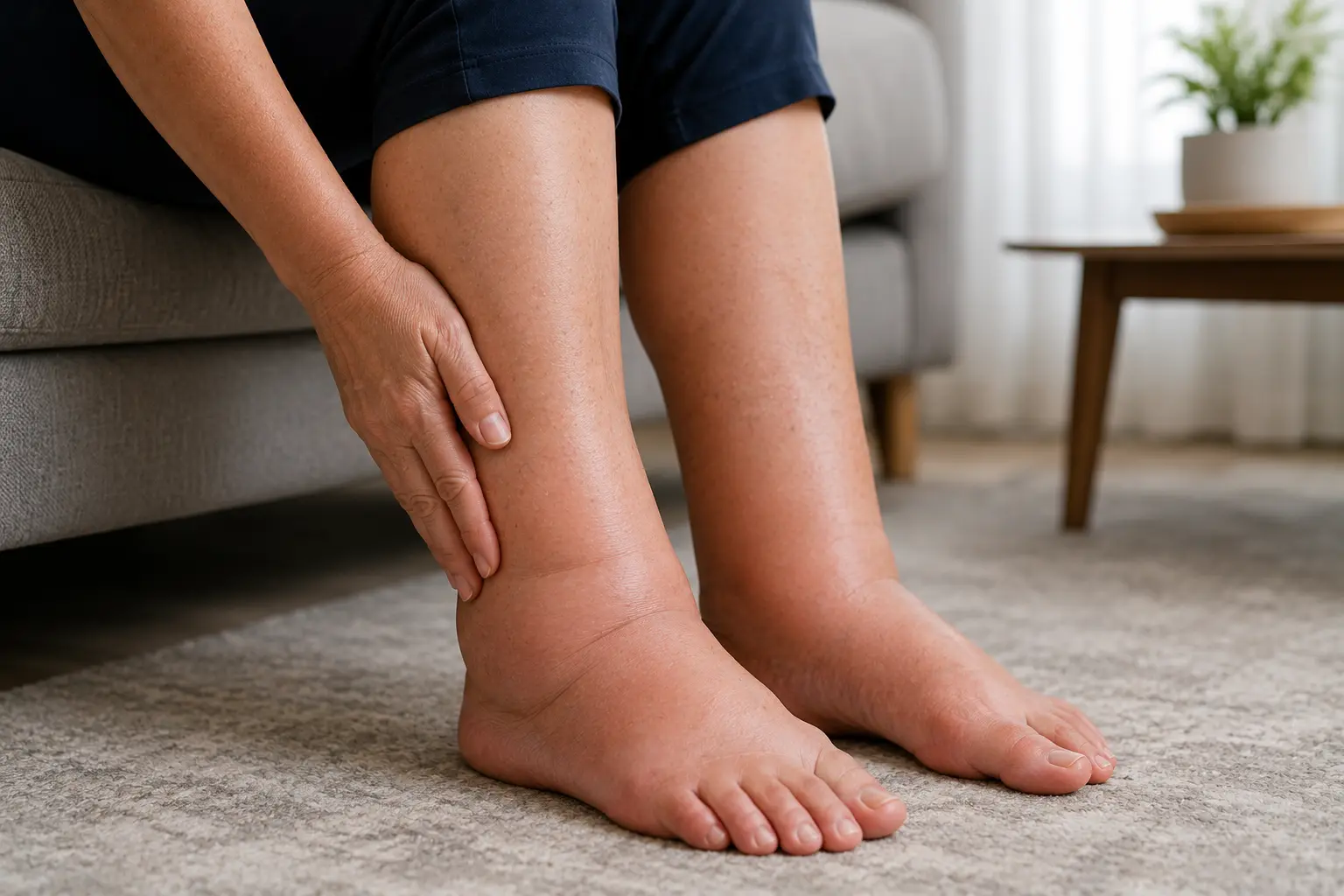
Diseased veins allow high pressure to build within the venous system, forcing watery fluid to escape through tiny capillary pores into surrounding tissues. This fluid accumulation creates visible peripheral edema, leaving the lower legs tight, heavy, and distended. While long periods of sitting or standing can trigger temporary fluid retention in anyone, damaged venous valves make the swelling persistent and progressive.
Venous Insufficiency vs. Systemic Edema
Distinguishing between localized circulatory failure and systemic medical disorders is essential before beginning any therapeutic protocol. Lower extremity swelling stems from several distinct mechanisms:
- Chronic Venous Insufficiency (CVI): Valve failure in the saphenous or branch veins causes localized fluid accumulation. The swelling is frequently asymmetric, worsens after hours of standing or sitting, and recedes when the legs are elevated.
- Lymphedema: Damage or blockages in the lymphatic system prevent protein-rich fluid from draining out of soft tissues. Lymphedema typically affects the tops of the feet and toes, causes a firm or non-pitting swelling, and does not resolve easily with elevation.
- Congestive Heart Failure: Reduced cardiac pumping capacity allows venous blood to back up throughout the body. This condition produces symmetric swelling in both legs alongside shortness of breath during exertion or while lying flat.
- Kidney and Liver Disease: Kidney dysfunction impairs the body's ability to excrete fluid and sodium, while liver failure reduces circulating albumin proteins that keep fluid inside blood vessels. Both conditions produce bilateral edema across the lower body.
- Medication Side Effects: Certain prescription drugs—such as calcium channel blockers, nonsteroidal anti-inflammatory drugs, and oral diabetes therapies—dilate blood vessels or promote fluid retention in the lower legs.
Warning Signs of Vein-Related Edema
Physical clues on the skin and soft tissues often accompany vein-related swelling. Patients frequently report an aching, fatigued sensation in their calves that intensifies as the day progresses. Restless sensations, burning, throbbing, and nocturnal muscle cramps are also common signs of venous congestion.
Hemosiderin staining is a classic indicator of long-standing venous disease. High venous pressure forces red blood cells into the skin tissues, where they disintegrate and leave behind iron pigment deposits that turn the skin around the ankles a rusty brown color. Without treatment, the skin can become dry, hardened, inflamed, and prone to open venous stasis ulcers.
Sudden, localized swelling accompanied by localized heat, skin redness, and calf tenderness requires immediate emergency evaluation to rule out deep vein thrombosis. A deep vein clot can detach and travel to the lungs, presenting a critical risk that must be distinguished from chronic venous reflux.
How Do Doctors Diagnose Leg Swelling in New Jersey?
Accurate diagnosis forms the foundation of any long-term treatment plan for lower limb fluid buildup. Because swelling can stem from vascular, lymphatic, cardiac, or renal origins, your physician conducts a methodical anatomical and physiological assessment.
Your initial consultation covers your medical history, physical activity levels, occupational demands, family history of vascular disease, and current medications. The physician physically examines both legs, assessing skin texture, checking for pitting edema by pressing a finger into the skin, and evaluating peripheral pulses.
Standing duplex ultrasound imaging serves as the definitive diagnostic standard for vein-related swelling. While standard ultrasounds are performed with the patient lying flat, venous reflux mapping requires you to stand upright so gravity can reveal the true extent of valve failure.
| Diagnostic Step | Clinical Action | Diagnostic Purpose |
|---|---|---|
| B-Mode Imaging | Visualizes vein structure and diameter | Identifies vessel enlargement and anatomical abnormalities |
| Doppler Flow Analysis | Measures direction and velocity of blood | Detects pathological backward blood flow |
| Calf Compression Test | Manually squeezes calf muscles to push blood upward | Assesses valve closure speed and reflux duration |
| Deep System Evaluation | Checks femoral, popliteal, and tibial veins | Rules out deep vein thrombosis or deep obstruction |
| Superficial Mapping | Traces great, small, and accessory saphenous veins | Pinpoints the specific source feeding the edema |
An ultrasound evaluation creates a complete anatomical map of your venous network. This mapping pinpoints the exact junctions where valves have failed, ensuring that treatment targets the primary source of reflux rather than just the visible surface swelling.
Treating visible surface veins without addressing the underlying refluxing trunk vein leads to rapid recurrence of both swelling and varicose veins. Correcting the primary source of reflux permanently drops the hydrostatic pressure that forces fluid out into your leg tissues.
What Are the Most Effective Leg Swelling Treatments in New Jersey?
Modern vascular medicine has replaced invasive surgical vein stripping with gentle, office-based interventions. Today's treatments resolve venous reflux under local anesthesia, allowing you to walk out of the clinic immediately after the procedure.
| Treatment Option | Primary Mechanism | Anesthesia Approach | Post-Procedure Recovery |
|---|---|---|---|
| Radiofrequency Ablation (RFA) | Thermal energy (heat) | Local tumescent anesthesia | Return to regular walking immediately; wear compression briefly |
| Endovenous Laser Therapy (EVLT) | Thermal energy (laser light) | Local tumescent anesthesia | Immediate ambulation; light compression support recommended |
| VenaSeal Medical Adhesive | Medical-grade cyanoacrylate | Local numbing at skin entry point | No tumescent anesthesia needed; compression often optional |
| Ultrasound-Guided Sclerotherapy | Chemical microfoam sclerosant | Minimal to none (fine needle) | Resume normal activity right away; brief compression wear |
| Microphlebectomy | Micro-extraction of surface veins | Local infiltration anesthesia | Tiny micro-punctures require no sutures; quick recovery |
Thermal Ablation Procedures
Thermal ablation uses targeted heat energy to seal diseased saphenous veins shut from the inside. Closing the diseased vein eliminates the backward pressure driving fluid out of your capillaries and into your tissues.
During Radiofrequency Ablation (RFA) or Endovenous Laser Therapy (EVLT), the physician inserts a slender catheter into the faulty vein through a tiny needle puncture under ultrasound guidance. A dilute mixture of local anesthetic and saline—called tumescent anesthesia—is injected around the perimeter of the vein. This fluid buffer numbs the area, compresses the vessel walls firmly against the catheter, and protects the surrounding nerves and skin from thermal energy.
Closing the vessel occurs as the device delivers controlled thermal energy while retracting along the length of the vein, causing the collagen in the vein wall to contract and seal the lumen. Your circulatory system immediately redirects blood flow into deeper, healthier veins with functional valves, and your body gradually absorbs the closed vessel over time.
Non-Thermal and Micro-Invasive Solutions
Non-thermal vein treatments offer alternatives for patients seeking relief without multiple numbing injections along the leg. These approaches are particularly valuable for treating branch vessels, tortuous veins, or patients sensitive to heat-based therapies.
- VenaSeal Closure System: A medical adhesive formulated for endovascular use is injected through a tiny catheter placed inside the diseased vein. The clinician delivers tiny droplets of adhesive while applying gentle external compression with the ultrasound transducer, sealing the vessel shut instantly without tumescent anesthesia.
- Ultrasound-Guided Foam Sclerotherapy: This technique targets diseased tributary veins and perforator veins feeding localized ankle swelling. A specialized medication is agitated into a microfoam and injected directly into the target vessels under real-time ultrasound guidance, displacing blood and causing the vessel walls to collapse and seal.
- Microphlebectomy: When swelling is accompanied by large, bulging surface veins, a microphlebectomy extracts the damaged vessels through tiny punctures that leave no scars and require no stitches.
Combining these techniques alongside standard varicose vein treatment addresses both the aesthetic concerns and the underlying venous congestion.
At-Home Strategies to Relieve Swelling in the Legs
Medical procedures correct the underlying valve failure, but conservative daily therapies play an essential role in keeping fluid moving through your circulatory and lymphatic systems.
- Wear Graduated Medical-Grade Compression Stockings:
Over-the-counter support socks deliver uniform, weak pressure that fails to move fluid effectively. Medical-grade compression stockings provide graduated support that is tightest at the ankle and gradually loosens as it extends up the calf, driving pooled fluid upward toward the central circulation. Put your stockings on early in the morning before swelling starts.
- Follow Proper Leg Elevation Protocols:
Propping your feet up on a low ottoman does not provide enough gravitational advantage to drain stagnant fluid. Recline and raise your legs above the level of your heart for fifteen to twenty minutes, three times each day. This position allows pooled venous blood and lymphatic fluid to drain naturally toward your core.
- Engage the Calf Muscle Pump:
Your calf muscles act as a natural secondary pump for your vascular system. Contracting your calves squeezes the deep veins, propelling blood upward past venous valves toward the heart. Take a short walking break every hour during prolonged sitting, or perform twenty seated heel-and-toe raises to keep blood circulating.
- Manage Sodium Intake and Hydration:
Consuming excess dietary salt causes your body to retain fluid, elevating venous pressure and aggravating tissue swelling. Replace processed foods with whole foods seasoned with natural herbs, and drink sufficient water throughout the day to support healthy kidney filtration.
Insurance Coverage for Leg Swelling Treatment in New Jersey
Because chronic leg swelling caused by venous insufficiency is a recognized vascular disorder rather than a cosmetic issue, diagnostic evaluations and corrective procedures are widely covered by major health insurance plans.
Medicare, Horizon Blue Cross Blue Shield, Aetna, Cigna, and United Healthcare routinely cover venous ultrasound mapping and minimally invasive corrective treatments when medical necessity criteria are satisfied.
Standard Insurance Pre-Authorization Process: - Documented clinical symptoms including pain, heaviness, edema, or skin changes - Diagnostic standing duplex ultrasound showing verified venous reflux - A documented trial of conservative care with daily compression wear and elevation - Submission of clinical notes and ultrasound images for insurance pre-authorizationCoverage pathways require comprehensive clinical documentation, which our administrative staff coordinates directly with your insurer to verify benefits before your procedure.
Booking an evaluation allows you to understand the exact cause of your lower leg edema and review your personalized treatment plan. Contact our team to schedule your standing ultrasound evaluation and take the first step toward lasting relief from swollen, heavy legs.
Frequently Asked Questions
What is the best doctor to see for leg swelling?
Vascular specialists and vein doctors are the best physicians to see when swelling affects your lower legs and ankles, particularly if it worsens throughout the day, accompanies aching or heavy sensations, or occurs alongside visible varicose veins. These specialists use standing duplex ultrasound to assess valve function in your superficial and deep veins. If your swelling begins suddenly in both legs, involves severe shortness of breath, or affects the abdomen, consult a primary care physician or cardiologist to evaluate heart, kidney, or liver function.
What is the best treatment for swelling legs?
The most effective treatment addresses the underlying medical cause of the fluid retention. For vein-related edema, office-based interventions such as Radiofrequency Ablation, Endovenous Laser Therapy, or VenaSeal adhesive provide lasting relief by closing the malfunctioning veins responsible for fluid leakage. For immediate symptom management, wearing graduated medical compression stockings, elevating the legs above heart level, and engaging the calf muscle pump through daily walking offer the best non-surgical relief.
Which doctor is best for leg swelling?
A board-certified vein doctor or vascular surgeon is the most qualified specialist to diagnose and treat swelling originating from chronic venous disease or lymphatic dysfunction. These clinicians have specialized training in non-invasive vascular ultrasound diagnostics and catheter-based corrective therapies. For generalized or bilateral edema caused by systemic conditions, your care team may coordinate with a cardiologist or nephrologist.
What drink flushes out edema in legs?
Plain water is the most effective drink for clearing excess fluid from the body. Drinking sufficient water supports your kidneys in filtering and excreting excess sodium, which directly reduces water retention in soft tissues. Unsweetened herbal teas, such as hibiscus or dandelion tea, provide gentle natural diuretic properties that can support fluid balance. Avoid sugary sodas, high-sodium broths, and excess alcohol, as they trigger water retention and worsen lower extremity swelling.
Ready to Address Your Vein Concerns?
Schedule a consultation with Dr. Hadaya to discuss your condition and explore treatment options.